


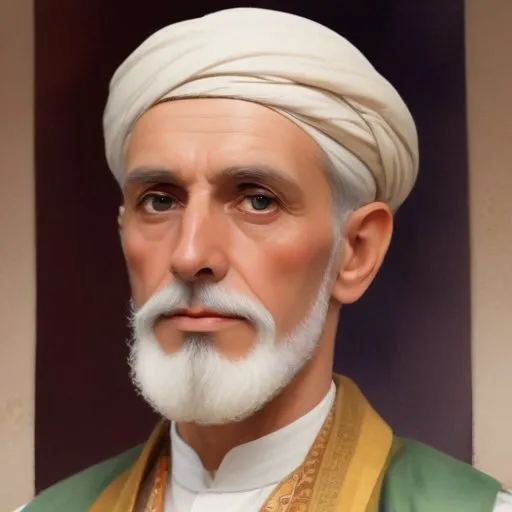
A British scholar who deciphered ancient Indian texts, including the Vedas, and founded the Royal Asiatic Society to promote Asian studies.
Hailed as the first great Sanskrit scholar in Europe, Henry Thomas Colebrooke (1765-1837) left an indelible mark on the field of oriental studies. His groundbreaking contributions to Sanskrit language and literature, botany, and commercial law paved the way for future generations of scholars and continue to influence modern society.
Colebrooke was born on June 15, 1765, to Sir George Colebrooke, 2nd Baronet, MP for Arundel and Chairman of the East India Company, and Mary Gaynor, daughter and heir of Patrick Gaynor of Antigua. He received his education at home, with a brief stint in France from the age of twelve to sixteen.
In 1782, Colebrooke was appointed to a writership with the East India Company in Calcutta, where he developed a deep fascination for Sanskrit language and literature. His magnum opus, Sanskrit Grammar, published in 1805, remains a seminal work in the field. He also wrote extensively on Hindu law, botany, and Indian trade policies.
Colebrooke's Remarks on the Husbandry and Commerce of Bengal (1795) boldly challenged the East India Company's monopoly on Indian trade, advocating for free trade between Britain and India. Although met with opposition, his work laid the groundwork for future commercial reforms.
Colebrooke's pioneering work in Sanskrit studies, commercial law, and botany has had far-reaching implications for modern society. His advocacy for free trade and commercial reform helped shape the course of Indian-British trade relations. His contributions to Sanskrit scholarship paved the way for future generations of orientalists and continue to influence Indological studies.
Colebrooke was elected a Fellow of the Royal Society (1816) and the Royal Society of Edinburgh (1816). He was also a founder of the Royal Astronomical Society (1820).
Colebrooke married Elizabeth Wilkinson in 1810, but the marriage was short-lived, ending with her death in 1814. He returned to England in 1815, where he continued to pursue his scholarly pursuits.
Colebrooke was a prolific writer, publishing numerous articles and treatises on a wide range of subjects, including botany, mathematics, and astronomy. Despite his many accomplishments, he never held a university chair, preferring to pursue his research independently.
Born in 1746
A pioneer in comparative linguistics, deciphering ancient scripts, and founding the Asiatic Society, he's renowned for discovering the Indo-European language family.
