


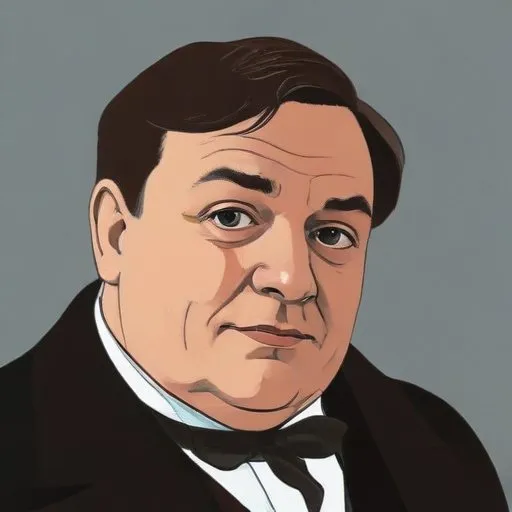
A French-born British writer and historian, he's renowned for his witty, humorous, and insightful writings on history, politics, and culture, particularly his Cautionary Tales for Children.
Hilaire Belloc, a gifted writer, historian, and orator, is best known for his captivating literary works, including Cautionary Tales for Children, which have become a staple in many British households. His writings spanned multiple genres, from religious poetry to comic verse, historical biographies, and travel works, showcasing his incredible versatility as a wordsmith.
Born on July 27, 1870, in La Celle-Saint-Cloud, France, to a French father, Louis Belloc, and an English mother, Bessie Rayner Parkes, Belloc's upbringing was marked by a strong sense of cultural duality. His mother, a writer, activist, and advocate for women's equality, instilled in him a love for literature and a strong sense of social responsibility.
Belloc attended Oxford University, where he served as President of the Oxford Union, and later became a naturalized British subject in 1902, while retaining his French citizenship.
Belloc's literary works are a testament to his boundless creativity and intellectual curiosity. His Cautionary Tales for Children, which includes tales like "Jim, who ran away from his nurse, and was eaten by a lion" and "Matilda, who told lies and was burned to death," have become beloved classics, known for their dark humor and moral lessons.
In addition to his children's literature, Belloc wrote historical biographies, travel works, and poetry, showcasing his incredible range as a writer. His most famous travel work, The Path to Rome (1902), is a testament to his love for history, culture, and adventure.
Belloc was an outspoken figure in British politics, serving as a member of Parliament from 1906 to 1910. He was one of the few openly Catholic members of Parliament during that time, and his faith had a profound impact on his writings and public persona.
Belloc was also a close friend and collaborator of G.K. Chesterton, and the two were often referred to as the "Chesterbelloc." This friendship was marked by frequent debates, public feuds, and a deep respect for one another's intellect and creativity.
Belloc's personal life was marked by controversy, particularly in his views on women's suffrage. Despite his mother's advocacy for women's equality, Belloc campaigned against women's suffrage as a member of the Women's National Anti-Suffrage League.
Belloc's feuds with contemporaries, including George Bernard Shaw, were legendary, with Shaw dubbing Belloc and Chesterton as the "Chesterbelloc." These debates and feuds have become an integral part of Belloc's public persona, showcasing his unwavering commitment to his beliefs and values.
Hilaire Belloc's legacy is a testament to his boundless creativity, intellectual curiosity, and commitment to his faith and values. His writings continue to captivate readers of all ages, and his influence can be seen in generations of writers, historians, and thinkers.
As a historian, writer, and public figure, Belloc's impact on modern society is undeniable. His works have shaped the way we think about history, culture, and morality, leaving an indelible mark on the literary and intellectual landscape of the 20th century.
Belloc's life and works serve as a testament to the power of creativity, intellectual curiosity, and unwavering commitment to one's values. His legacy continues to inspire and captivate readers, cementing his place as one of the most important writers and historians of the 20th century.
Born in 1874
A renowned writer and thinker who crafted clever essays, poems, and plays that explored the human condition, often with a dash of wit and humor. His works continue to inspire and challenge readers to this day.
Born in 1903
A renowned English writer, known for his witty satires and novels of manners, particularly "Brideshead Revisited", which explores the British aristocracy's decline.
Born in 1888
A Catholic priest and writer who penned detective fiction, including the "Ten Commandments of Detective Fiction," influencing the genre's development.
Born in 1898
Renowned author of fantasy series, including The Chronicles of Narnia, and prominent Christian apologist, exploring the intersection of faith and reason.
Born in 1892
Creator of Middle-earth, a richly detailed fantasy world, and author of The Hobbit and The Lord of the Rings trilogy, which have become cultural touchstones.
Born in 1881
Wrote humorous, lighthearted stories and plays, often featuring aristocrats and gentlemen, that are still widely popular today for their wit and clever wordplay.
