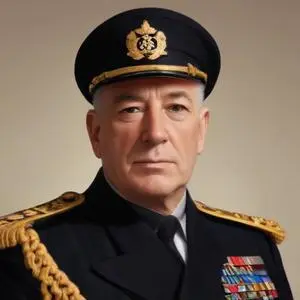
Hyman G. Rickover: The Visionary Father of the Nuclear Navy
The Pioneering Admiral Behind the Navy's Nuclear Revolution
Hyman G. Rickover, a legendary admiral in the United States Navy, is renowned for directing the original development of naval nuclear propulsion, a groundbreaking achievement that transformed the face of naval warfare. As the director of the U.S. Naval Reactors office, Rickover controlled the operations of nuclear propulsion for three decades, earning him the esteemed title of "Father of the Nuclear Navy."
A Humble Beginning: Early Life and Education
Born Chaim Gdala Rykower on January 27, 1900, in Maków Mazowiecki, Poland, Rickover's family fled anti-Semitic Russian pogroms during the Revolution of 1905, eventually settling in New York City in 1906. His parents, Abraham and Rachel, changed his name to Hyman, derived from Chayyim, meaning "life." Rickover's journey began with his early education, which laid the foundation for his remarkable career.
A Life of Service: Milestones and Achievements
Rickover's illustrious career spanned over 63 years, making him the longest-serving naval officer and member of the U.S. armed forces in history. Some of his remarkable achievements include:
- Directing the development of the world's first commercial pressurized water reactor, the Shippingport Atomic Power Station
- Receiving two Congressional Gold Medals, a rare honor shared by only three others
- Serving in flag rank for nearly 30 years, concluding his career as a four-star admiral
- Holding the distinction of being the longest-serving member of the U.S. armed forces
A Legacy of Safety and Innovation
Rickover's unwavering commitment to safety and innovation led to the United States Navy's impressive record of zero reactor accidents. His leadership and vision played a pivotal role in shaping the Navy's nuclear program, earning him recognition as one of the most important officers in Navy history.
Philosophical Contributions and Beliefs
Rickover's leadership philosophy was rooted in his strong work ethic, discipline, and attention to detail. He believed in the importance of education, stating, "Education is what remains after one has forgotten what one has learned in school." His emphasis on personal responsibility and accountability resonated throughout his career, inspiring generations of naval officers.
Influence on Modern Society
Rickover's pioneering work in nuclear propulsion has had a profound impact on modern society. His contributions to the development of commercial nuclear power and his advocacy for nuclear energy have made a significant difference in the global energy landscape.
Controversies and Public Perception
Throughout his career, Rickover faced criticism for his strict leadership style and disagreements with high-ranking officials. However, his unwavering commitment to safety and his unparalleled expertise ultimately earned him widespread respect and admiration.
Quotes and Memorable Sayings
Rickover's quotes and sayings continue to inspire and motivate:
- "Paperwork will ruin any military force."
- "Respect for authority comes with authority's demonstration of respect."
- "The more you sweat in practice, the less you bleed in battle."
Historical Context and Legacy
Rickover's remarkable career coincided with a pivotal period in American history, spanning two World Wars and the dawn of the nuclear age. His legacy extends beyond his military achievements, as he played a crucial role in shaping the course of American history.
Awards and Honors
Rickover's numerous awards and honors include:
- Two Congressional Gold Medals
- Navy Distinguished Service Medal
- Legion of Merit
- Presidential Medal of Freedom
Charitable Work and Social Contributions
Rickover was an ardent supporter of education and was involved with various charitable organizations, including the United Service Organizations (USO) and the Navy League.
Inspirational Stories and Motivations
Rickover's extraordinary life serves as a testament to the power of hard work, determination, and vision. His story inspires generations to strive for excellence and push the boundaries of human achievement.
Predictions and Speculations
As the world continues to navigate the complexities of nuclear energy, Rickover's legacy serves as a reminder of the importance of safety, innovation, and responsible leadership. His pioneering work will undoubtedly shape the course of future technological advancements.
Visual Timeline and Milestones
- 1900: Born Chaim Gdala Rykower in Maków Mazowiecki, Poland
- 1906: Flees to New York City with family
- 1937: Becomes a Naval engineering duty officer (EDO)
- 1953: Appointed director of the U.S. Naval Reactors office
- 1982: Retires as a four-star admiral
- 1986: Passes away on July 8
Trivia and Fun Facts
- Rickover's name was changed from Chaim to Hyman, derived from Chayyim, meaning "life."
- He substituted George for his middle name Godalia, a form of Gedaliah.
- Rickover's parents changed his name to avoid anti-Semitic persecution in Poland.
Rickover's remarkable life and legacy continue to inspire and motivate generations. As the world looks to the future of nuclear energy and technological advancements, the "Father of the Nuclear Navy" remains an enduring symbol of innovation, safety, and visionary leadership.
FAQ
What was Hyman G. Rickovers role in the development of the US Navys nuclear program?
Hyman G. Rickover played a key role in the development of the US Navys nuclear program, overseeing the design and construction of the worlds first nuclear-powered submarine, the USS Nautilus.
What was Hyman G. Rickovers education and background?
Hyman G. Rickover graduated from the United States Naval Academy and served in the US Navy during World War I and World War II, before becoming a leading figure in the development of nuclear energy.
How did Hyman G. Rickover contribute to the development of commercial nuclear power?
Hyman G. Rickovers work on nuclear reactors for the US Navy laid the foundation for the development of commercial nuclear power, and he later advocated for the use of nuclear energy in civilian applications.
What awards did Hyman G. Rickover win for his contributions to nuclear energy?
Hyman G. Rickover won numerous awards for his contributions to nuclear energy, including the Enrico Fermi Award and the Congressional Medal of Honor.
What is Hyman G. Rickovers legacy in nuclear energy?
Hyman G. Rickovers legacy in nuclear energy lies in his pioneering work on nuclear reactors, his leadership in the development of the US Navys nuclear program, and his advocacy for the safe and efficient use of nuclear energy.