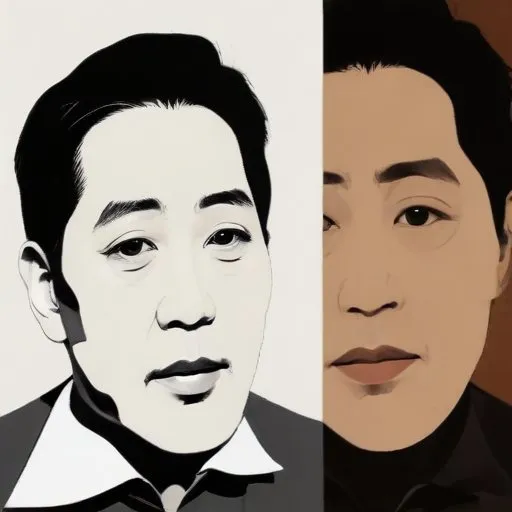
Im Sangsoo: The Maverick Filmmaker Revolutionizing South Korean Cinema
A Daring Voice in Contemporary Korean Film
Im Sangsoo is a South Korean film director and screenwriter renowned for his thought-provoking and unapologetic exploration of social taboos, politics, and human relationships. Twice invited to compete for the prestigious Palme d'Or at the Cannes Film Festival, Im has established himself as a fearless and innovative storyteller in modern Korean cinema.
Early Life and Film Career
Born on April 27, 1962, in Seoul, South Korea, Im studied sociology at Yonsei University before pursuing his passion for filmmaking at the Korean Academy of Film Arts (KAFA) in 1989. His early career saw him work as an assistant director under prominent filmmakers Park Jeongwon and Kim Youngbin, honing his skills and crafting his unique voice.
BREAKING GROUND: Controversial Debuts and Critical Acclaim
Im's directorial debut,
Girls Night Out (1998), sparked controversy with its frank and sexually charged dialogue, while
Tears (2000), a gritty drama about homeless teenagers, showcased his commitment to realism by using non-professional actors and a low-budget, miniDV-shot approach. This bold start set the tone for his future projects, which would continue to challenge societal norms and audience expectations.
The turning point came with Good Lawyer's Wife (2003), which topped the South Korean box office charts and premiered at the Venice International Film Festival. This success was followed by The Housemaid (2010), which earned Im his first Palme d'Or nomination at Cannes, and The Taste of Money (2012), which solidified his reputation as a master of provocative, socially conscious filmmaking.
A director's vision: pushing boundaries and sparking conversations
Im's films are characterized by their unflinching examination of Korea's social hierarchies, politics, and human relationships. His work often walks the fine line between controversy and critical acclaim, sparking essential conversations about the country's complexities and contradictions. Through his daring approach, Im has inspired a new generation of Korean filmmakers and earned international recognition as a visionary storyteller.
Legacy and Impact
Im Sangsoo's contributions to Korean cinema extend beyond his own filmography. He has influenced a new wave of filmmakers, encouraging them to tackle difficult subjects and challenge the status quo. As a pioneer of innovative storytelling, Im continues to leave an indelible mark on the industry, ensuring that his legacy will be felt for generations to come.
- The Housemaid (2010)
- The Taste of Money (2012)
- Good Lawyer's Wife (2003)
- Girls Night Out (1998)
- Tears (2000)
Quotes and Memorable Sayings
"I try to make films that are not easily digestible, films that make people uncomfortable."
"I believe that cinema should be a reflection of reality, not an escape from it."
"...I'm not trying to make a statement, I'm just trying to show the truth."
FAQ
What is Im Sang-soos filmography?
Im Sang-soo is a South Korean film director and screenwriter known for films such as A Good Lawyers Wife, The Housemaid, and The Taste of Money, which have received critical acclaim and won numerous awards.
What is Im Sang-soos directing style?
Im Sang-soos directing style is characterized by a focus on character development, social commentary, and psychological insight, often exploring themes of family, relationships, and power dynamics.
What is Im Sang-soos influence on Korean cinema?
Im Sang-soos work has had a significant impact on Korean cinema, helping to establish the countrys film industry as a major force in global cinema and inspiring a new generation of filmmakers.
What is Im Sang-soos awards and recognition?
Im Sang-soo has won numerous awards for his films, including the Un Certain Regard prize at the Cannes Film Festival and the Grand Bell Award for Best Director in Korea.
What is Im Sang-soos impact on Asian cinema?
Im Sang-soos contributions to Asian cinema have helped to promote the regions film industry globally, and his films have been celebrated for their unique perspectives on Korean culture and society.