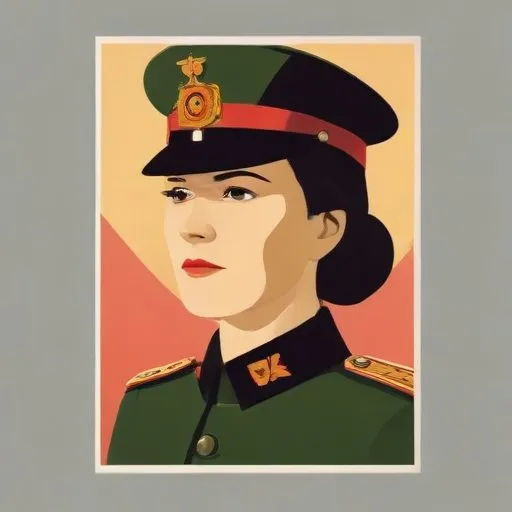
Irena Iakowicz: The Fearless Polish Intelligence Agent
Irena Iakowicz, also known as Iakowiczowa, was a Polish second lieutenant of the National Armed Forces and a daring intelligence agent who risked her life to fight against the Nazi occupation of Poland during World War II. Born on July 26, 1906, in Berlin, Germany, Iakowicz proved to be a true patriot, using her exceptional linguistic skills and cunning to gather crucial information that aided the Polish resistance movement.
A Polyglot with a Mission
Iakowicz's linguistic abilities were truly remarkable, speaking seven languages fluently, including Polish, French, English, Persian, Finnish, German, and Russian. Her polyglot skills served her well in her role as an intelligence agent, allowing her to move seamlessly between different countries and environments.
Early Life and Education
Iakowicz was born to Bolesław Morzycki and Władysława Zakrzewska, and had a younger brother, Jerzy. After the October Revolution in 1917, her family relocated to Finland, where she spent her formative years. Later, she attended a school led by the Sisters of the Holy Heart of Jesus in Zbylitowska Góra, Poland. She furthered her education at Grenoble University in France, studying humanities.
A Life of Adventure and Danger
Iakowicz's life was marked by adventure and danger. She married Aziz Zangenah, the son of an Iranian prince, and lived with him in a palace in Persia. However, the isolation and distance from her homeland proved too much, and she secretly left her husband and returned to Poland with the help of Polish diplomats.
Joining the Polish Resistance
In 1939, following the German and Soviet invasions of Poland, Iakowicz joined the Polish resistance movement, specifically the Organizacja Wojskowa Związek Jaszczurczy. She assumed the pseudonym Barbara Zawisza and began working as an intelligence agent in the Zachód West unit, gathering vital military, economic, and information intelligence.
Personal Life and Family
Iakowicz married Jerzy Olgierd Iakowicz in 1934, and they had a daughter, Ligia, in 1936. During the war, she and her husband lived at different addresses to avoid being arrested by the Gestapo.
Legacy and Impact
Irena Iakowicz's bravery and selflessness in the face of overwhelming danger have left an indelible mark on Polish history. Her extraordinary linguistic skills, combined with her fierce determination, made her an invaluable asset to the Polish resistance movement. Her legacy serves as a testament to the power of courage and patriotism in the face of adversity.
Iakowicz's remarkable story is a testament to the bravery and resilience of women during World War II, and her contributions to the Polish resistance movement will never be forgotten.
FAQ
What was Irena Iłakowiczs role in World War II?
Irena Iłakowicz was a German-Polish lieutenant who played a significant role in the Polish resistance movement during World War II. She was involved in various clandestine operations, including intelligence gathering and sabotage.
What were Irena Iłakowiczs most notable achievements during the war?
Irena Iłakowiczs most notable achievements during the war included her participation in the Warsaw Uprising and her role in the Polish underground army. She was also involved in the rescue of Jewish people from the Warsaw Ghetto.
What happened to Irena Iłakowicz after the war?
After the war, Irena Iłakowicz remained involved in Polish politics and continued to advocate for social justice and human rights. She received several awards for her bravery and heroism during the war.
What is Irena Iłakowiczs legacy in Polish history?
Irena Iłakowiczs legacy in Polish history is that of a brave and courageous heroine who risked her life to fight against Nazi occupation during World War II. She remains an important figure in Polish resistance history.
How has Irena Iłakowiczs story been preserved?
Irena Iłakowiczs story has been preserved through oral histories, wartime documents, and museum exhibits. Her bravery and heroism have inspired generations of Poles and continue to serve as a reminder of the importance of standing up against oppression.