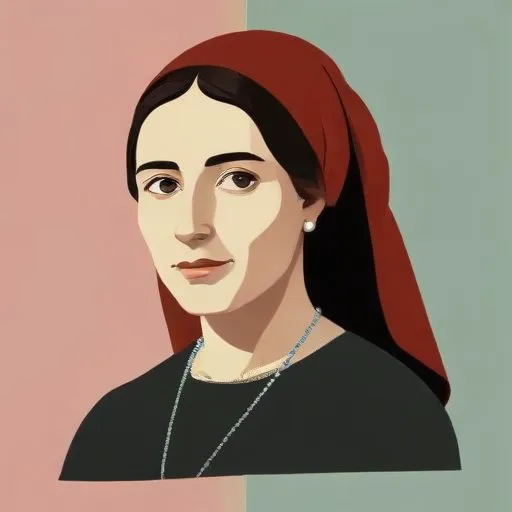
Irene di Spilimbergo: The Renaissance Painter and Poet
A Legacy in Art and Literature
Irene di Spilimbergo is renowned for her exemplary works in both visual art and literature, leaving an indelible mark on the Italian Renaissance. Her poetic elegies, published posthumously, comprise a staggering 381 poems, including 279 in Italian and 102 in Latin, earning her a revered status among her contemporaries.
Early Life and Artistic Beginnings
Born on October 17, 1538, in Spilimbergo, a small town in the province of Pordenone, Irene demonstrated her artistic prowess from a tender age. Under the tutelage of the celebrated painter Titian, she honed her skills for two years, fortifying her position as a prominent female artist of the Renaissance.
A Painter and a Poet
Irene's artistic oeuvre, although scarce, is a testament to her mastery of various mediums. Her poetic compositions, often anonymous or attributed to other notable cultural figures, showcase her lyricism and emotional depth. Her paintings, few as they are, demonstrate a keen sense of color and composition, earning her comparisons with Sofonisba Anguissola, another esteemed female painter of the era.
The Elegies: A Testament to Her Artistic Voice
Irene's poetic elegies, edited and published by Dionigi Atanagi two years after her death, contain works by prominent figures such as Lodovico Dolce,
Torquato Tasso, and Girolamo Muzio. This collection not only underscores Irene's own poetic prowess but also highlights her connections within the Renaissance cultural elite.
A Portrait of the Artist
The National Gallery of Art in Washington, D.C. houses two paintings attributed to Irene's circle: a portrait of her sister Emilia di Spilimbergo, with a landscape background, attributed to Gian Paolo Pace, a follower of Titian; and a pendant portrait of Irene herself, thought to be the work of Gian Paolo Pace and Titian. These paintings offer a glimpse into Irene's life and artistic circle.
A Life Cut Short
Tragically, Irene's life was cut short when she died in Venice at the age of 21. Despite her brief career, her artistic and literary legacy continues to inspire and fascinate art historians and enthusiasts alike.
Influence and Legacy
Irene di Spilimbergo's contributions to the Renaissance cultural landscape are multifaceted and profound. Her works embody the spirit of the virtuosa, a Renaissance ideal that celebrates the convergence of artistic and intellectual pursuits. As a pioneering female artist and poet, Irene paved the way for future generations of women to pursue careers in the arts.
- Major Works: Poetic elegies (published posthumously), attributed paintings
- Influences: Titian, Sofonisba Anguissola, Renaissance cultural elite
- Notable Contemporaries: Lodovico Dolce, Torquato Tasso, Girolamo Muzio
- Legacy: Pioneering female artist and poet, embodiment of the Renaissance virtuosa ideal
FAQ
Who was Irene di Spilimbergo?
Irene di Spilimbergo was an Italian Renaissance poet and painter who lived in the 16th century.
What is Irene di Spilimbergos most notable work?
Irene di Spilimbergos most notable work is her poetry, which is known for its lyricism and elegance.
What style of painting did Irene di Spilimbergo use?
Irene di Spilimbergos style of painting was influenced by the Venetian Renaissance and featured delicate and intricate designs.
Did Irene di Spilimbergo have any notable patrons?
Yes, Irene di Spilimbergo had several notable patrons, including the nobleman Giovanni Cornaro.
What is Irene di Spilimbergos legacy in art?
Irene di Spilimbergos legacy in art is that of a trailblazing female artist who helped to pave the way for future generations of women in the arts.