


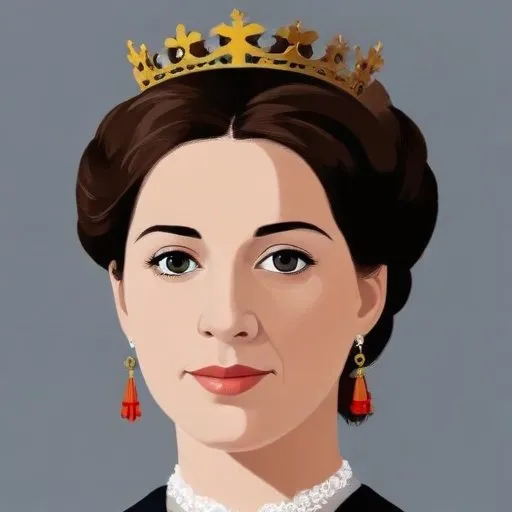
Queen of Spain from 1833 to 1868, known for her tumultuous reign marked by political instability, corruption, and social unrest. She was eventually exiled to France after a revolution.
Isabella II of Spain, also known as Isabella the Catholic, is notoriously remembered as the Spanish monarch who ruled with an iron fist, sparking a series of civil wars, and ultimately, her own downfall. Born on October 10, 1830, in Madrid, Spain, Isabella II was the queen regnant of Spain from 1833 to 1868, a period marked by intense turmoil, political instability, and power struggles.
Following the death of her father, King Ferdinand VII, Isabella II ascended to the throne at the tender age of three, with her mother, Maria Christina, serving as regent until she came of age. During her early reign, Isabella II faced significant opposition from her uncle, Don Carlos, who disputed her claim to the throne, sparking the Carlist Wars. These conflicts would haunt her reign, as she struggled to consolidate power and assert her authority.
Despite the turmoil, Isabella II's reign was marked by significant attempts at modernization and reform. She supported the development of infrastructure, encouraging the construction of railroads, canals, and telegraph networks. Additionally, she promoted education, establishing the Instituto de Fomento y Orientación Profesional, a pioneering institution for vocational training. However, these efforts were often overshadowed by her authoritarian tendencies and the persistent Carlist threats.
Isabella II's personal life was marred by scandals and controversies. Her marriage to her cousin, Francisco de Asís de Borbón, was marked by infidelity and power struggles. The queen's own extramarital affairs, particularly with General Francisco Serrano, sparked widespread criticism and public disillusionment. Her decadent lifestyle, extravagant spending, and alleged corruption further eroded her popularity, ultimately contributing to her downfall.
The 1868 Glorious Revolution, led by General Juan Prim and liberal forces, finally toppled Isabella II from the throne. Forced into exile, she abdicated in favor of her son, Alfonso XII, and settled in Paris, where she lived out the remainder of her life in relative obscurity. Her legacy, once marked by grand ambitions and promises of reform, was ultimately overshadowed by the turmoil and instability that characterized her reign.
Isabella II's tumultuous reign left an indelible mark on Spanish history. Her authoritarianism and corruption contributed to the erosion of the monarchy's legitimacy, paving the way for the eventual establishment of the First Spanish Republic in 1873. Despite her controversies, Isabella II's modernizing efforts and support for education and infrastructure development laid the groundwork for Spain's future growth and development.
Isabella II's complex, often contradictory legacy serves as a testament to the turbulent nature of Spanish history during the 19th century. Despite her flaws and controversies, her impact on Spain's development and modernization cannot be ignored, making her a compelling, if flawed, figure in the annals of Spanish history.
Born in 1892
The authoritarian leader who ruled Spain with an iron fist from 1939 to 1975, suppressing opposition and imposing conservative values, while also modernizing the economy. He's infamous for his brutal regime and human rights abuses.
Born in 1887
The last queen of Spain before the abolition of the monarchy, she was a British princess who married King Alfonso XIII and played a significant role in Spanish history.
