


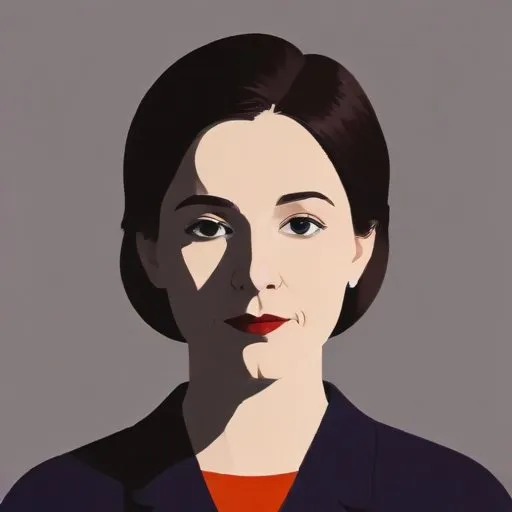
Scotland's first female architect, known for her pioneering work in the male-dominated field and designing buildings that blended modernity with traditional Scottish styles.
Isobel Hogg Kerr Beattie was a trailblazing Scottish architect who broke convention by becoming possibly the first woman to practice architecture on a regular basis in Scotland. Her remarkable career spanned several decades, leaving an indelible mark on the industry.
Beattie was born on August 25, 1900, to Lewis Beattie and Alice Walker Kerr, a farming family. She pursued her passion for architecture at the Edinburgh College of Art from 1921 to 1926, where she excelled in her studies. Her academic prowess was evident in her merit list achievements, including a 57 in Building Construction Stage III and 71 in Stage IV.
Beattie's professional journey began with a stint in an architectural office, followed by a brief period of independent practice from 1928 to 1929. She then returned to the Edinburgh College of Art to further her education, earning a diploma. Her talent and dedication earned her admission as an Associate of the Royal Institute of British Architects in 1931 while working with the prominent firm Jamieson & Arnott in Edinburgh.
Beattie later relocated to Dumfries, where she worked independently, making her mark on the local architectural landscape. Her commitment to her craft led her to maintain a modest workspace in an architectural office on Castle Street, Dumfries.
Isobel Hogg Kerr Beattie's groundbreaking career paved the way for future generations of women in architecture. Her legacy extends beyond her impressive body of work to the empowering message she embodied: that women could excel in a male-dominated profession.
The National Monuments Record of Scotland proudly holds a collection of slides related to her work, ensuring her contributions to Scottish architecture are preserved for posterity.
Beattie's remarkable life came to a close on July 13, 1970, after an illness. Yet, her pioneering spirit and accomplishments continue to inspire architects, engineers, and builders today.
Through her remarkable journey, Isobel Hogg Kerr Beattie left an enduring legacy, forging a path for future generations of architectural innovators.
Born in 1868
A pioneering figure in the Glasgow School of Art, this visionary blended elegant lines, flowing curves, and organic forms to create iconic furniture, textiles, and buildings that epitomize Art Nouveau style.
Born in 1879
Founded the school of behaviorism, which focused on observable behaviors rather than internal thoughts or feelings, and is known for his controversial "Little Albert" experiment.
