


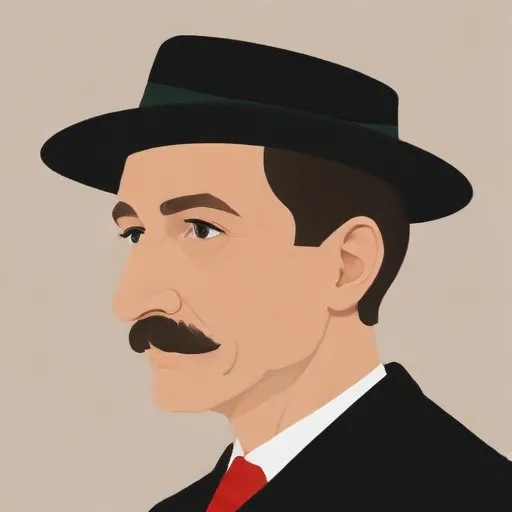
A Hungarian writer of children's books, particularly famous for his series about a clever and resourceful fox, which has been translated into many languages and adapted into animated films.
István Fekete, a Hungarian writer born on January 25, 1900, in Gölle, Austria-Hungary, is best known for his youth novels and animal stories that have captivated readers of all ages. His writings, which often featured themes of adventure, nature, and self-discovery, have become an integral part of Hungarian literary heritage.
Fekete's most celebrated work is perhaps Tüskevár Castle, a youth novel published in 1957, which tells the story of two city boys who spend their summer holiday at the corner of Lake Balaton and Zala River, and their experiences, adventures, and contact with nature. The novel has been widely acclaimed and was awarded the Attila József Prize in 1960.
In addition to Tüskevár Castle, Fekete wrote several other notable works, including Vuk, the Little Fox, a novel about a clever and resourceful fox cub, which was later adapted into an animated film; Lutra, the Otter, a film adaptation of which was released in 1986; and Thistle, a novel about a sheepdog pumi, which was also adapted into a film in 1967.
Fekete's works have received numerous awards and recognition, including the Attila József Prize in 1960 for Tüskevár Castle. In 2005, his novel was voted the 8th most liked novel in Hungary in the Big Read survey.
Fekete's works often reflected his deep connection with nature and his belief in the importance of contact with the natural world for human development. His writing also emphasized the value of self-discovery, adventure, and personal growth.
Fekete was born in Gölle, Austria-Hungary, in 1900, and spent his early years in the countryside, which later influenced his writing. He began writing at a young age and continued to write throughout his life, producing a body of work that has had a lasting impact on Hungarian literature.
Fekete's writing career spanned several decades, during which he witnessed significant changes in Hungarian society and politics. Despite these changes, his works remained focused on themes of nature, adventure, and personal growth, which have continued to resonate with readers to this day.
Fekete's legacy is that of a writer who has made a significant contribution to Hungarian literature, particularly in the genres of youth novels and animal stories. His works continue to be widely read and appreciated, and his writing has inspired generations of Hungarian writers and readers alike.
Born in 1885
A Hungarian literary mastermind, celebrated for his innovative, psychologically nuanced novels and poetry that probed the human condition, often with a touch of irony and humor.
Born in 1901
A Hungarian dentist who wrote plays and books, known for his literary works that explored themes of social justice and morality. His writings often critiqued the social norms of his time.
