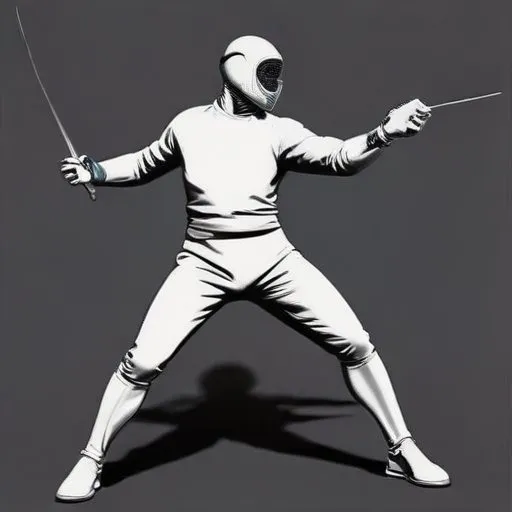
Italo Santelli: The Father of Modern Sabre Fencing
The Legacy of a Fencing Pioneer
Italo Santelli, an Italian fencer, is revered as the father of modern sabre fencing, a style that revolutionized the sport with its emphasis on quick defense. Born on August 15, 1866, in Carrodano, La Spezia, Italy, Santelli's contributions to the world of fencing have left an indelible mark on the sport.
Early Life and Education
Santelli's educational background played a significant role in shaping his future as a fencer. He attended the Scuola Magistrale of Rome and the Scuola Magistrale Militare di Roma, graduating in 1889. This foundational knowledge would later enable him to develop his revolutionary fencing style.
The Birth of Modern Sabre Fencing
In 1896, Santelli moved to Budapest, Hungary, where he began to develop his modern sabre fencing style. This innovative approach focused on quick defense, deviating from the classical training methods of the time. The "Santelli style" soon gained recognition, and he showcased it at the 1900 Summer Olympics in Paris.
Olympic Glory and Controversy
At the 1900 Olympics, Santelli represented Italy, earning a silver medal in sabre and finishing sixth in foil. However, his Olympic journey was not without controversy. During the 1924 Summer Olympics, a dispute arose over a judging decision, leading to the Italian team's withdrawal from the competition. Santelli was called as a witness in the subsequent inquiry, which sparked accusations that he had spoken out against his teammate, Aldo Boni, to eliminate him from the competition.
Career Highlights and Coaching Legacy
Santelli's coaching career was marked by notable successes, including his work with George Worth, the Hungarian-born American Olympic medalist fencer. Worth, born György Woittitz, was a prominent figure in the fencing world, and Santelli's guidance played a significant role in his development.
Philosophical Contributions and Beliefs
Santelli's approach to fencing was rooted in his belief in the importance of adaptability and quick reflexes. He advocated for a more agile and responsive style, which has since become a hallmark of modern sabre fencing. His philosophical contributions have had a lasting impact on the sport, influencing generations of fencers and coaches.
Personal Milestones and Key Life Events
Santelli's personal life was marked by significant events, including the birth of his son, Giorgio, in Hungary in 1897. Giorgio would go on to maintain his Italian citizenship, even after the family's move to the United States.
Influence on Modern Society and Pop Culture
Santelli's impact on modern society extends beyond the world of fencing. His innovative approach to the sport has inspired generations of athletes and coaches, influencing the development of other martial arts and combat sports. His legacy has also been felt in popular culture, with his style and techniques referenced in films and literature.
Historical Context and Legacy
Italo Santelli's contributions to fencing are deeply rooted in the historical context of the late 19th and early 20th centuries. His pioneering work in modern sabre fencing has left an indelible mark on the sport, shaping its development and influencing its modern practitioners. As the father of modern sabre fencing, Santelli's legacy continues to inspire and influence the world of fencing.
Comparative Analysis with Contemporaries
When compared to his contemporaries, Santelli's contributions to fencing stand out for their innovative and adaptive nature. His emphasis on quick defense and agility set him apart from other fencers of his era, solidifying his position as a pioneer in the sport.
Awards and Honors
Santelli's achievements in fencing have been recognized through various awards and honors. His Olympic medal and numerous coaching successes are a testament to his dedication and expertise in the sport.
Trivia and Fun Facts
- Santelli's brother, Otello, was also a fencer and accompanied him to Hungary.
- Santelli's move to the United States was followed by his son, Giorgio, who maintained his Italian citizenship.
- Santelli's modern sabre fencing style was initially met with skepticism, but he persevered, eventually earning recognition for his innovative approach.
Conclusion
Italo Santelli's impact on the world of fencing is immeasurable. As the father of modern sabre fencing, his contributions have shaped the sport, influencing generations of athletes and coaches. His legacy continues to inspire and influence the world of fencing, solidifying his position as one of the most important figures in the sport's history.