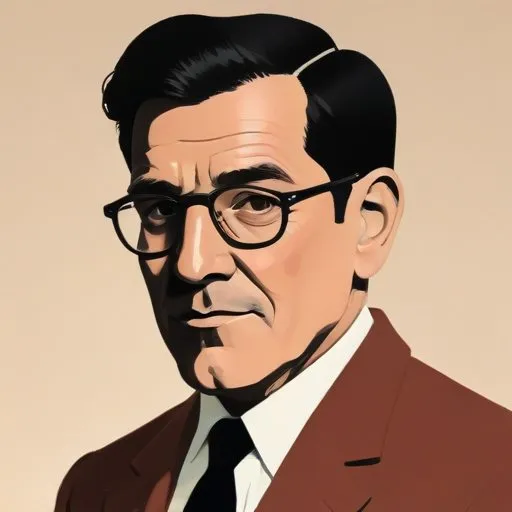
J. Frank Dobie: The Champion of Texas Folklore
A Life Dedicated to Preserving Rural Texas Traditions
J. Frank Dobie was an American folklorist, writer, and newspaper columnist best known for his vivid depictions of life in rural Texas during the days of the open range. Through his numerous books, Dobie managed to capture the rich cultural heritage of the Lone Star State, earning him a reputation as one of the most beloved storytellers of his time.
Early Life and Inspirations
Born on September 26, 1888, on a ranch in Live Oak County, Texas, Dobie was the eldest of six children. His early life was filled with stories from his parents, Richard and Ella, who instilled in him a love for literature and the arts. His father's readings from the Bible and his mother's recitations from classics like
Ivanhoe and
The Pilgrim's Progress sparked Dobie's imagination and laid the groundwork for his future writing career.
Education and Early Writing Career
Dobie's educational pursuits took him to Southwestern University in Georgetown, Texas, where he developed a passion for English poetry under the guidance of a dedicated professor. This mentorship encouraged Dobie to pursue writing as a career. After graduating in 1910, Dobie worked as a journalist for various newspapers in San Antonio and Galveston before venturing into teaching.
Folklore and the Texas Folklore Society
In 1913, Dobie joined the faculty of the University of Texas at Austin, where he became affiliated with the Texas Folklore Society. This association marked the beginning of his extensive research into Texas folklore, which would become the hallmark of his writing career. Dobie's work with the society helped to preserve the state's rich cultural heritage, including its music, stories, and traditions.
Wartime Experiences and Literary Success
During World War I, Dobie served in the field artillery and was briefly sent overseas. This experience had a profound impact on his writing, which became more vivid and introspective. After the war, Dobie's writing career flourished, with the publication of his first book,
Tongues of the Monte (1923), which received critical acclaim.
Impact on Texas and Beyond
Dobie's contributions to Texas folklore and literature extended far beyond the state's borders. His work helped to promote a deeper understanding and appreciation of rural Texas culture, inspiring generations of writers, musicians, and artists. In addition, Dobie's advocacy for the preservation of the Texas Longhorn breed of cattle helped to save the species from extinction.
Philosophical Contributions and Beliefs
Throughout his life, Dobie was known for his liberal views and outspoken criticism of what he saw as the mechanization of modern life. He believed in the importance of preserving individual liberty and promoting a sense of community, which was reflected in his writing. Dobie's philosophical contributions continue to resonate with readers today, offering a unique perspective on the human experience.
Awards and Honors
Dobie's literary achievements were recognized with numerous awards and honors, including the Lomax Award (1942) and the Philosophical Society of Texas Award (1951). In 1964, the University of Texas at Austin awarded Dobie an honorary doctorate degree in recognition of his contributions to Texas literature and folklore.
Legacy and Impact on Modern Society
J. Frank Dobie's legacy extends far beyond his literary achievements. He was a champion of rural Texas culture, a passionate advocate for individual liberty, and a believer in the importance of preserving our cultural heritage. As a writer, folklorist, and educator, Dobie inspired generations of Texans and Americans, leaving behind a rich cultural legacy that continues to inspire and educate us today.