


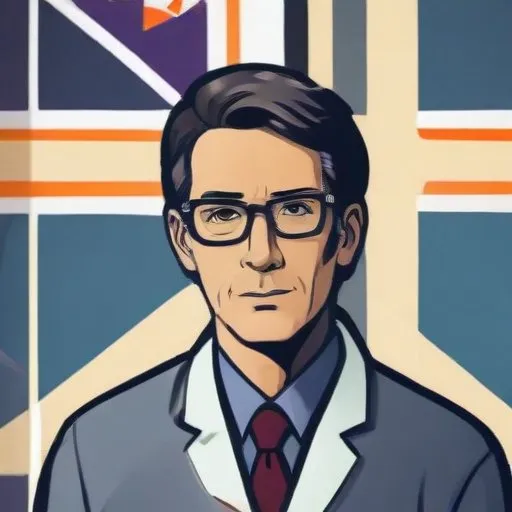
A pioneer in medical imaging, he developed algorithms for computer-aided diagnosis and was a leading figure in the development of magnetic resonance imaging (MRI) technology.
J. Michael Brady is renowned for his groundbreaking contributions to the field of oncological imaging, pioneering the development of medical image analysis techniques that have revolutionized the diagnosis and treatment of cancer. As an emeritus professor of oncological imaging at the University of Oxford, Brady's work has had a profound impact on the medical community, shaping the way we understand and combat this debilitating disease.
Born on April 30, 1945, Brady's academic journey began at the University of Manchester, where he earned a first-class Bachelor of Science degree in mathematics in 1966. He furthered his education with a Master of Science degree in 1968, followed by a Doctor of Philosophy degree in 1970 from the Australian National University, where he conducted research on group theory under the supervision of László György Kovács.
Brady's research career has been marked by a series of innovations that have transformed the field of image analysis. At MIT, he worked on shape analysis, robotics, and medical image analysis, collaborating with prominent researchers such as Haruo Asada, Jon Connell, and Demetri Terzopoulos. His work on multiscale representation of bounding contours of shapes, curvature primal sketch, and the application of differential geometry to three-dimensional data has been particularly influential.
In 1985, Brady established the Robotics Laboratory at the University of Oxford, attracting a talented team of researchers, including Andrew Blake, Andrew Zisserman, and Lionel Tarassenko. His initial focus was on mobile robotics, where he worked closely with Huosheng Hu and Jan Gräf.
Brady's contributions to science have been recognized with several prestigious awards, including his election as a foreign associate member of the French Academy of Sciences in 2015. He has also held the esteemed position of BP Professor of Information Engineering at Oxford from 1985 to 2010.
J. Michael Brady's work has had a profound impact on the field of oncological imaging, enabling doctors to diagnose and treat cancer more effectively. His legacy continues to inspire future generations of researchers, ensuring that his pioneering spirit and innovative approach will shape the future of medical imaging.
Born in 1919
Developer of the first practical CT scanner, revolutionizing medical imaging and diagnostics. This invention enabled doctors to non-invasively visualize the internal body, leading to countless lives saved and improved healthcare outcomes.
Born in 1924
Developed the computerized axial tomography (CAT) scan, revolutionizing medical imaging and diagnostics. This innovation enabled doctors to non-invasively visualize the human body in unprecedented detail.
