


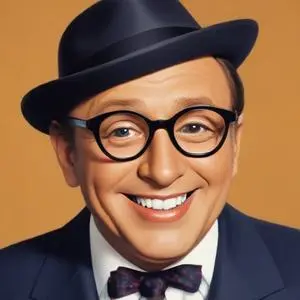
A beloved comedian and radio personality, famous for his witty humor, stingy persona, and iconic catchphrase "Your money or your life!"
Jack Benny, born Benjamin Kubelsky, was a legendary American entertainer who dominated the realm of comedy, radio, television, and film for over four decades. He is renowned for his unparalleled comic timing, expressive facial expressions, and signature catchphrases, including "Well..." and "Your money or your life."
Born on February 14, 1894, in Chicago, Illinois, Benny grew up in Waukegan, Illinois, as the son of Jewish immigrants Meyer and Naomi Kubelsky. He began taking violin lessons at the age of six and soon became a child prodigy. However, his passion for music was not matched by his enthusiasm for practice.
Benny's early career saw him playing in dance bands and his high school orchestra. He later ventured into vaudeville, performing in local theaters for a modest $7.50 a week. This marked the beginning of his journey to becoming a household name.
In 1932, Benny transitioned to radio, where he created his iconic character: a miserly, vain, and perpetually 39-year-old violinist. His show, The Jack Benny Program, became an instant hit, featuring his signature blend of wit, satire, and physical comedy.
As radio's popularity waned, Benny seamlessly shifted to television, where he continued to entertain audiences with his unique brand of humor. His TV show, The Jack Benny Program, ran from 1950 to 1965, cementing his status as a master of the small screen.
Benny's comedy was built on his exceptional timing, ability to convey humor through facial expressions, and his arsenal of catchphrases. His signature pause, raised eyebrow, and exasperated "Well..." became ingrained in popular culture.
His comedic style was characterized by self-deprecation, irony, and wit, often poking fun at his own vanity, stinginess, and violin playing skills (or lack thereof). This unique blend of humor resonated with audiences and earned him a loyal following.
Jack Benny's impact on the entertainment industry is immeasurable. He is often credited with shaping the sitcom genre, influencing generations of comedians, and inspiring countless radio and TV shows.
Benny's pioneering work in comedy paved the way for future legends like Johnny Carson, Bob Hope, and Johnny Cash. His influence extends beyond the entertainment industry, with his comedic style and wit continuing to inspire contemporary comedians and writers.
Benny married Sadie Marks, later known as Mary Livingstone, in 1927, and remained together until his passing in 1974. He was an avid philanthropist, supporting various charities, including the United Service Organizations (USO).
Jack Benny's legacy extends beyond his own remarkable career. He has inspired countless comedians, writers, and entertainers, leaving an indelible mark on the world of comedy and entertainment.
Benny's life and work serve as a testament to the power of innovation, creativity, and dedication. As a master of comedy, he continues to entertain and inspire audiences to this day, cementing his place as one of the greatest entertainers of the 20th century.
89 Years Old
A renowned English cricketer and coach, known for his exceptional fast bowling and influential coaching stints with the English national team.
Born in 1916
A popular singer and actor, best known for being one of the original Mouseketeers on Disney's The Mickey Mouse Club and a frequent guest on The Jack Benny Program.
Born in 1904
A popular radio personality and actor, best known for his folksy humor and starring role in Disney's "The Jungle Book" as Baloo the bear.
Born in 1896
A legendary comedian and entertainer, known for his quick wit, charming stage presence, and iconic cigar, starring in films and TV shows that brought laughter to generations.
Born in 1895
A zany comedian and actress who delighted audiences with her witty banter and comedic timing on stage, screen, and radio, particularly in the 1930s and 1940s.
Born in 1920
A renowned rugby player and coach who led the New Zealand national team to several victories, including a series win against South Africa in 1956. He's also credited with developing the "forward-dominated" playing style.
