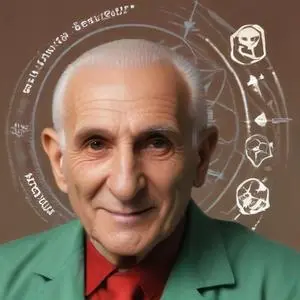
Dr. Jack Kevorkian: The Controversial Figure Who Championed the Right to Die
The Right to Die: Kevorkian's Lifelong Crusade
Dr. Jack Kevorkian, also known as "Dr. Death," was a pathologist and euthanasia proponent who sparked a national debate on physician-assisted suicide. He assisted at least 130 patients in ending their lives, believing that dying was not a crime, and that individuals had the right to control their own destiny.
Early Life and Education
Born on May 26, 1928, in Pontiac, Michigan, to Armenian immigrants Levon and Satenig Kevorkian, Jack grew up in a family that valued education and compassion. His father, Levon, worked in an automobile foundry, while his mother, Satenig, fled the Armenian Genocide of 1915 and found refuge in Paris before reuniting with her brother in Pontiac. Jack's parents instilled in him a strong sense of justice, which would later shape his views on euthanasia.
The Path to Controversy
Kevorkian's journey into the spotlight began in 1990, when he assisted in the death of a 54-year-old woman suffering from Alzheimer's disease. This act sparked a national debate on euthanasia, with many hailing Kevorkian as a hero and others condemning him as a murderer. Over the next decade, Kevorkian assisted in numerous suicides, often using his "Mercitron" machine, which allowed patients to administer the lethal dose themselves.
The Trial and Conviction
In 1998, Kevorkian was arrested and tried for the assisted suicide of Thomas Youk, a 52-year-old man suffering from
Lou Gehrig's disease. The trial was highly publicized, with many prominent figures testifying on Kevorkian's behalf. However, in 1999, Kevorkian was convicted of second-degree murder and sentenced to 10-25 years in prison.
Legacy and Impact
Kevorkian's actions and beliefs have had a profound impact on modern society. His advocacy for physician-assisted suicide has led to the legalization of the practice in several states, including Oregon, Washington, and Vermont. Additionally, Kevorkian's story has been the subject of numerous books, films, and plays, ensuring that his legacy continues to spark debate and discussion.
Quotes and Memorable Sayings
- "Dying is not a crime."
- "I don't think I'm going to be able to change the world, but I think I can make a dent."
Personal Milestones and Key Life Events
- Born on May 26, 1928, in Pontiac, Michigan
- Graduated from the University of Michigan Medical School in 1952
- Assisted in the death of his first patient in 1990
- Convicted of second-degree murder in 1999
- Released on parole on June 1, 2007
Influence on Pop Culture
Kevorkian's story has been portrayed in several films and television shows, including the award-winning HBO movie "You Don't Know Jack," starring
Al Pacino as Kevorkian. Additionally, his life and beliefs have been the subject of numerous books, including "Glances Back: The Biography of Dr. Jack Kevorkian" and "Between the Dying and the Dead: Dr. Jack Kevorkian's Greatest Escape."
FAQ
What was Jack Kevorkians role in the right-to-die movement?
Jack Kevorkian was a vocal advocate for the right-to-die movement, assisting in the deaths of over 130 terminally ill patients between 1990 and 1998. His actions sparked a national debate on assisted suicide and euthanasia.
How did Jack Kevorkians background influence his views on death?
Jack Kevorkians background as a pathologist and his experience with death during the Korean War shaped his views on the importance of dignity and autonomy in dying. He believed that patients had the right to choose their own fate.
What were the legal consequences of Jack Kevorkians actions?
Jack Kevorkian was arrested multiple times for his role in assisted suicide and was eventually convicted of second-degree murder in 1999. He served eight years in prison before being released on parole in 2007.
How did Jack Kevorkians views on death change over time?
Jack Kevorkians views on death evolved over time, shifting from a focus on the act of dying itself to a broader emphasis on the importance of quality of life and dignity in dying.
What was Jack Kevorkians legacy in the medical community?
Jack Kevorkians legacy in the medical community is complex, with some viewing him as a champion of patient autonomy and others seeing him as a rogue doctor who disregarded traditional medical ethics.