


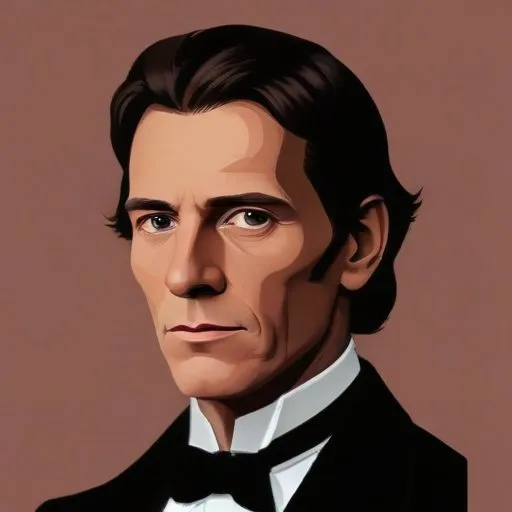
Wrote popular historical novels for young readers, making history accessible and engaging for a new generation.
Jacob Abbott is best known for his extensive collection of children's books, which have captivated young readers for generations. With a staggering 180 books to his name, Abbott's works have become a cornerstone of American children's literature.
Born on November 14, 1803, in Hallowell, Maine, Abbott was the son of Jacob Abbott II and Betsey Chandler. He attended the Hallowell Academy and later graduated from Bowdoin College in 1820.
Ambitiously pursuing a career in education and literature, Abbott taught at Portland Academy, was a tutor at Amherst College, and eventually became a professor of mathematics and natural philosophy at Amherst College. His passion for writing led him to author numerous books, including juvenile fiction, brief histories, biographies, religious books, and popular science works.
Abbott's most renowned series, the Rollo Books, follows the adventures of a young boy named Rollo and his friends. Titles such as Rollo at Play and Rollo in Europe have become classics in American children's literature, offering valuable lessons and entertainment for young readers.
In addition to his literary achievements, Abbott founded the Mount Vernon School for Young Ladies in Boston in 1829 and the Mount Vernon School for Boys in New York City in 1845. He also co-founded Abbott's Institute with his brothers and was its principal from 1843 to 1851.
Jacob Abbott's legacy extends beyond his impressive literary output to the countless young lives he touched through education. His commitment to providing high-quality education and wholesome entertainment for children has made him a beloved figure in American literary history.
Abbott's life was marked by significant milestones, including his graduation from Bowdoin College, his licensure to preach, and the founding of various educational institutions. He passed away on October 31, 1879, leaving behind a rich literary and educational heritage.
Through his vast range of works and educational endeavors, Jacob Abbott has left an indelible mark on American literature and education, inspiring generations of young readers and educators alike.
Jacob Abbott's remarkable life and literary achievements serve as a testament to his commitment to education, literature, and the betterment of society.
Born in 1811
Wrote influential abolitionist novels, including "Uncle Tom's Cabin", which humanized the horrors of slavery and fueled the anti-slavery movement.
Born in 1835
Witty writer of classics like "The Adventures of Tom Sawyer" and "The Adventures of Huckleberry Finn", known for humor and social commentary.
Born in 1819
Author of epic sea tales and philosophical explorations, including the iconic "Moby-Dick", which continues to influence literature and popular culture.
Born in 1809
A master of dark and atmospheric storytelling, crafting haunting tales of mystery and horror that continue to captivate readers to this day.
Born in 1804
Author of dark, psychologically complex tales that explore the human condition, often set in 17th-century New England, and known for his masterpiece "The Scarlet Letter".
Born in 1803
A leading figure in the Transcendentalist movement, he advocated for individualism, self-reliance, and nature-inspired spirituality through his essays and poetry. His ideas continue to influence American thought and culture.
Born in 1817
A 19th-century thinker who advocated for simple living, civil disobedience, and individualism, inspiring generations to reevaluate their relationship with nature and society.
Born in 1783
Author of the iconic tales "The Legend of Sleepy Hollow" and "Rip Van Winkle", credited with creating the first American folklore and shaping the country's literary identity.
