


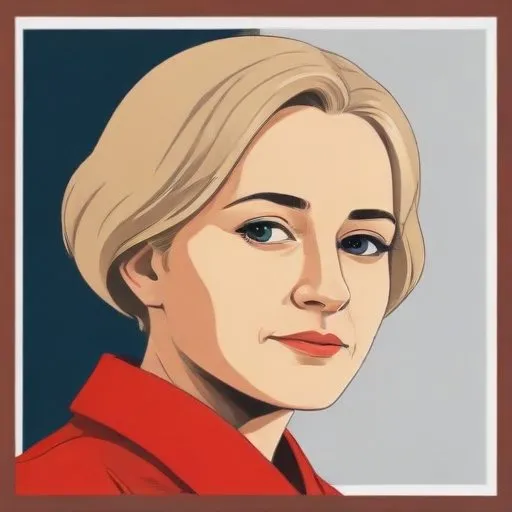
A renowned Polish expert in sociology and political science, known for her groundbreaking research on post-communist transitions and Eastern European politics. Her work has significantly shaped our understanding of the region's complex dynamics.
Jadwiga Staniszkis was a renowned Polish sociologist and political scientist, celebrated for her thought-provoking works on the phenomena of socialism and her unwavering commitment to academia and intellectual freedom. As a prolific author and professor, she made significant contributions to the understanding of socialist societies, earning recognition both nationally and internationally.
Staniszkis was born on April 26, 1942, in Poland, to a family of notable heritage. Her grandfather, Witold Teofil Staniszkis, was a prominent politician who tragically lost his life in the Auschwitz concentration camp in 1941 during the German occupation of Poland. This event likely influenced Staniszkis' future academic pursuits and her stance on social issues.
She pursued her academic interests at the University of Warsaw, where she earned her Ph.D. in sociology in 1971, with a dissertation titled "Patologie struktur organizacyjnych" (Pathologies of Organizational Structures). She later completed her habilitation in the humanities in 1978, solidifying her position as a leading expert in her field.
Staniszkis' academic journey was marked by her unwavering dedication to her research and her unrelenting quest for intellectual freedom. She worked as a professor at the University of Warsaw and later at the Wysza Szkoa Biznesu Higher Business School, a Polish campus of National-Louis University.
Her research focused on the dialectics of socialist societies, and she authored several influential books on the subject. Notably, her works were often met with controversy, and some were even confiscated by the secret service SB due to their critical examination of the communist government. Despite these challenges, Staniszkis continued to publish her research, with her works being translated into multiple languages, including Japanese and French.
Staniszkis' academic pursuits were not without personal costs. In 1968, she was arrested and dismissed from her university position for participating in student protests against the communist government. This event marked a significant turning point in her life, as she continued to advocate for intellectual freedom and academic autonomy.
In her later years, Staniszkis struggled with Alzheimer's disease, a challenge that she faced with courage and resilience. She passed away on April 15, 2024, leaving behind a legacy of academic excellence and a body of work that continues to inspire and educate scholars around the world.
Jadwiga Staniszkis' contributions to the field of sociology and political science are immeasurable. Her work has influenced generations of scholars, offering a nuanced understanding of socialist societies and their complexities. Through her unwavering commitment to academic freedom and her courage in the face of adversity, Staniszkis has left an indelible mark on the academic community.
Today, her legacy serves as a testament to the power of intellectual curiosity, academic rigor, and personal resilience. As a trailblazing sociologist and political scientist, Jadwiga Staniszkis will continue to inspire and educate scholars, ensuring that her work remains relevant and vital for years to come.
79 Years Old
A prominent dissident and advocate for democracy, known for his courageous opposition to Poland's communist regime and influential writings on politics and history.
99 Years Old
A Polish journalist and politician who played a key role in the country's transition from communism to democracy, serving as the first non-communist prime minister since World War II. He's known for his efforts to reform the Polish economy and politics.
Born in 1926
A renowned filmmaker behind iconic Polish New Wave cinema, known for powerful, poignant, and visually stunning works that often explored Poland's complex history and identity.
