


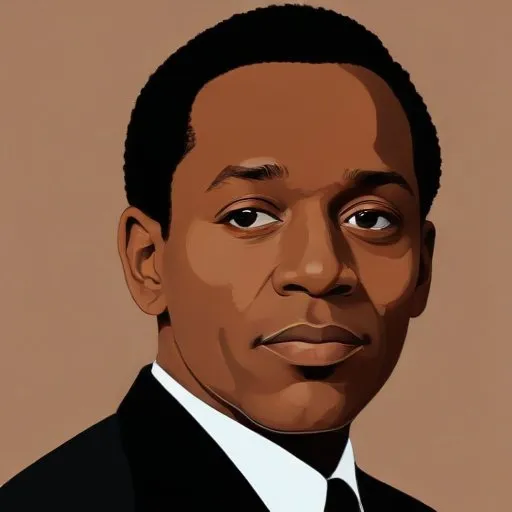
Acclaimed author of poignant and nuanced short stories and essays that explore the African American experience, delving into themes of identity, culture, and social justice.
James Alan McPherson, the first African American writer to win the Pulitzer Prize for Fiction, was a masterful storyteller who delved into the intricacies of human relationships, identity, and the search for meaning. Through his poignant essays and short stories, McPherson shed light on the complexities of the human experience, earning him a coveted spot among the literary elite.
Born on September 16, 1943, in Savannah, Georgia, McPherson was the second of four children to a master electrician father and a maid mother. His early life was marked by struggles, with his father's battle with alcoholism and imprisonment. Despite these challenges, McPherson found solace in the colored branch of the public library, where he discovered the power of words and the world of reading.
McPherson's academic pursuits took him to Morgan State University from 1963 to 1964, and later to Morris Brown College, where he earned his undergraduate degree in history and English in 1965. He then went on to receive a LL.B. from Harvard Law School in 1968, partially financing his studies by working as a janitor.
It was during his time at Harvard Law School that McPherson's writing career began to take shape. His short story "Gold Coast" won an open reading competition sponsored by The Atlantic Monthly, earning him public recognition and establishing a close working relationship with editor Edward Weeks.
McPherson's subsequent work as a contributing editor at The Atlantic Monthly led to the publication of numerous essays and short stories, solidifying his position as a rising star in the literary world. In 1978, he became the first African American writer to win the Pulitzer Prize for Fiction for his collection of short stories,
Throughout his work, McPherson explored the complexities of human relationships, race, and identity. His writing often touched on the struggles of growing up African American in the South, and the search for meaning and connection in a society grappling with inequality and injustice.
McPherson's philosophical contributions extended beyond his literary work. He was a strong advocate for the importance of education and the power of storytelling, believing that words had the ability to bring people together and spark meaningful change.
McPherson's impact on modern society is multifaceted. As a pioneering African American writer, he paved the way for future generations of writers of color. His work continues to influence contemporary literature, with many writers citing him as a source of inspiration.
Furthermore, McPherson's commitment to education and social justice has had a lasting impact on the literary community. He served as a professor emeritus of fiction at the Iowa Writers' Workshop, where he mentored numerous aspiring writers and shared his expertise with the literary world.
Despite his numerous accolades, McPherson's work was not without controversy. Some critics accused him of being overly introspective, while others praised his unflinching exploration of the human condition.
McPherson's response to criticism was characteristically introspective, stating, "I'm not trying to explain the world to anyone, I'm trying to explain myself to myself."
James Alan McPherson's legacy extends far beyond his literary achievements. He has left an indelible mark on the literary world, inspiring generations of writers to explore the complexities of the human experience.
As a writer, educator, and social activist, McPherson's contributions have had a profound impact on modern society. His commitment to education, social justice, and the power of storytelling continues to inspire and educate readers to this day.
In the words of McPherson himself, "The only way to get to the truth is to get to the heart of the matter, and the only way to get to the heart of the matter is to go through the confusion."
James Alan McPherson's remarkable life and legacy serve as a testament to the transformative power of words, and the importance of exploring the human experience in all its complexity.
95 Years Old
A celebrated author and editor, renowned for crafting powerful, poignant novels that explore the African American experience, particularly the lives of black women, and the horrors of slavery and racism.
82 Years Old
A celebrated author of powerful, poignant stories and poems that explore the experiences of African American women, delving into themes of identity, oppression, and social justice. Her works are known for their emotional depth and lyrical prose.
89 Years Old
Award-winning author of novels and non-fiction books, exploring themes of Canadian identity, history, and social issues. Known for his thought-provoking and engaging storytelling style.
Born in 1891
A celebrated author and anthropologist who explored African-American culture through novels, stories, and folklore, particularly in the rural South during the early 20th century.
Born in 1902
A renowned poet, novelist, and playwright who powerfully voiced the experiences and struggles of African Americans during the Harlem Renaissance, using jazz and blues rhythms to convey the spirit of his people.
Born in 1914
A pioneering African American writer who explored the complexities of race and identity through his novels, particularly the classic "Invisible Man".
Born in 1924
A renowned African American writer and civil rights activist, known for exploring the experiences of black Americans through novels, essays, and poetry that probe issues of race, identity, and social justice.
93 Years Old
Acclaimed author of novels and short stories that explore the experiences of African Americans, particularly in the rural South, often focusing on themes of social justice and personal identity.
