


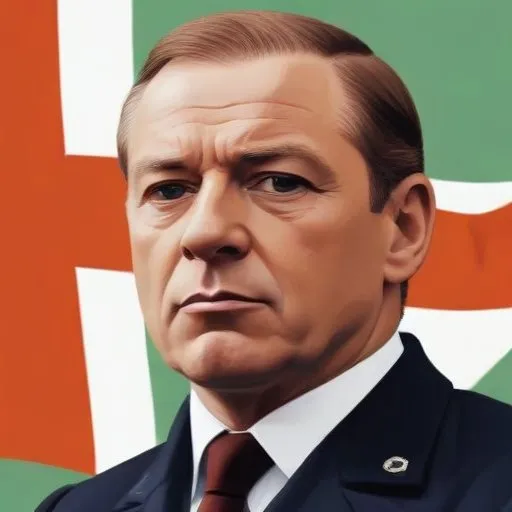
First Prime Minister of Northern Ireland, leading the country from 1921 to 1940 and playing a key role in shaping its early years. He's known for his strong unionist stance and efforts to establish a stable government.
James Craig, 1st Viscount Craigavon, was a leading Irish unionist who played a pivotal role in shaping the fate of Northern Ireland as a devolved region within the United Kingdom. As a key architect of Northern Ireland, Craig defied the British government in preparing an armed resistance in Ulster to an all-Ireland parliament, ultimately securing the opt-out of six Ulster counties from the dominion statehood accorded Ireland under the terms of the 1921 Anglo-Irish Treaty.
Born on January 8, 1871, in Sydenham, Belfast, James Craig was the son of James Craig, a wealthy whiskey distiller, and Eleanor Gilmore Browne. He was the seventh child and sixth son in a family of eight sons and one daughter. Craig was educated at Merchiston Castle School in Edinburgh, Scotland, and later began work as a stockbroker, eventually opening his own firm in Belfast.
Craig enlisted in the 3rd Militia battalion of the Royal Irish Rifles on January 17, 1900, to serve in the Second Boer War. He was seconded to the Imperial Yeomanry, a cavalry force created for service during the war, as a lieutenant in the 13th battalion on February 24, 1900.
Craig's political career was marked by his unwavering commitment to the unionist cause. He was elected as the Member of Parliament (MP) for East Down in 1906 and later became the leader of the Ulster Unionist Party. During the Home Rule Crisis of 1912-1914, Craig defied the British government in preparing an armed resistance in Ulster to an all-Ireland parliament.
In 1921, Craig accepted partition as a final settlement, securing the opt-out of six Ulster counties from the dominion statehood accorded Ireland under the terms of the Anglo-Irish Treaty. He became the first Prime Minister of Northern Ireland, a position he held until his death in 1940. Craig publicly characterized his administration as a Protestant counterpart to the Catholic state nationalists had established in the south.
Craig was created a baronet in 1918 and raised to the Peerage in 1927. He was appointed as the Viscount Craigavon, a title he held until his death in 1940.
James Craig, 1st Viscount Craigavon, left an indelible mark on the history of Northern Ireland. His leadership and commitment to the unionist cause helped shape the region's identity and future. Despite controversies and criticisms, Craig remains a significant figure in Irish and British history, remembered for his unwavering dedication to his people and his country.
