


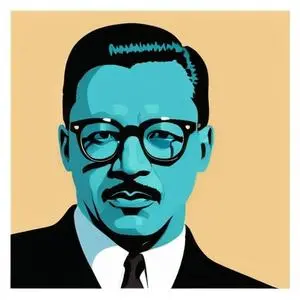
The assassin who fatally shot civil rights leader Martin Luther King Jr. on a Memphis hotel balcony, sparking widespread outrage and riots across the US. This event had a profound impact on the civil rights movement and American history.
James Earl Ray is widely recognized as the man responsible for one of the most heinous crimes in American history: the assassination of civil rights leader Martin Luther King Jr. on April 4, 1968. Ray's actions on that fateful day in Memphis, Tennessee, sent shockwaves across the nation, propelling him into the annals of infamy.
Raised in a turbulent household in Alton, Illinois, Ray was born on March 10, 1928, to George Ellis Ray and Lucille Ray (née Maher). His family, of Irish, Scottish, and Welsh ancestry, was plagued by financial instability and frequent relocations. Ray's father, known as "Great Dane," was a fugitive who regularly fled from law enforcement, forcing the family to adopt aliases, including "Raynes." James Earl Ray was the oldest of nine siblings, and his education was cut short when he dropped out of school at the tender age of 12.
Ray joined the U.S. Army in 1946, but his military stint was marked by discipline issues and eventual discharge. He struggled to adapt to civilian life, and his criminal activities began to escalate. In the 1950s and 1960s, Ray was arrested and imprisoned multiple times for various crimes, including burglary, forgery, and mail theft.
On April 4, 1968, Ray's notorious crime catapulted him to infamy. From the balcony of the Lorraine Motel in Memphis, Tennessee, he fired the fatal shot that killed Martin Luther King Jr. The civil rights leader's death sent shockwaves across the nation, sparking widespread protests, unrest, and calls for justice. Ray's subsequent flight from the United States and eventual capture in the United Kingdom further solidified his notoriety.
In 1969, Ray pleaded guilty to the assassination, avoiding a jury trial and the possibility of a death sentence. He was sentenced to 99 years in prison, where he would spend the remainder of his life. Throughout his imprisonment, Ray maintained his innocence, claiming he was a scapegoat in a larger conspiracy.
In the years following Ray's conviction, conspiracy theories surrounding King's assassination began to emerge. Loyd Jowers, the owner of a Memphis restaurant, claimed to have been part of a plot to kill King, and Ray maintained that he was an unwitting pawn in a larger scheme. In 1999, a Memphis civil trial concluded that Jowers was liable for the assassination, and that King was the victim of a conspiracy involving government agencies. The King family has consistently supported Ray's innocence, though this claim has been disputed by the U.S. Department of Justice.
James Earl Ray's heinous crime continues to resonate in American society, serving as a stark reminder of the nation's ongoing struggle for racial equality and social justice. His actions not only claimed the life of a pivotal figure but also sparked widespread outrage, protests, and a renewed commitment to achieving Dr. King's vision of a more equal society.
Throughout his life, James Earl Ray remained resolute in his claims of innocence, stating, "I didn't do it. I didn't shoot Martin Luther King." His words, though often met with skepticism, continue to fuel speculation and debate surrounding the assassination.
97 Years Old
A prominent leader in the civil rights movement, advocating for racial equality and social justice through nonviolent means, leaving a lasting impact on American history.
Born in 1925
A Navy officer, lawyer, and politician who served as US Attorney General, playing a key role in the Civil Rights Movement and advocating for social justice. He was a prominent figure in American politics during the 1960s.
Born in 1908
The 36th President of the United States, a skilled politician and leader, played a crucial role in passing landmark civil rights legislation, including the Civil Rights Act and Voting Rights Act.
Born in 1913
The 37th President of the United States, a polarizing figure who led the country through significant domestic and foreign policy changes, infamous for his involvement in the Watergate scandal.
Born in 1913
The 38th President of the United States, a former football star and lawyer, is known for being the first vice president to assume the presidency under the 25th Amendment and for his controversial pardon of Richard Nixon. He's also remembered for his humble and accidental rise to the presidency.
Born in 1924
A naval officer turned politician who served as the 39th President of the United States, known for his commitment to human rights and social justice, and awarded the Nobel Peace Prize in 2002.
Born in 1911
The charismatic leader who championed conservative policies, helped end the Cold War, and is often credited with restoring American pride and optimism. He's also remembered for his folksy, actor-honed communication style.
Born in 1919
A segregationist governor who famously stood in a schoolhouse door to block integration, later renouncing his racist views and becoming a symbol of redemption.
