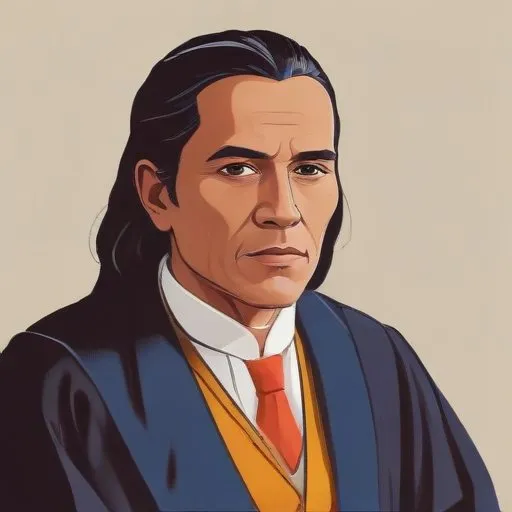
James Lockhart: Unveiling the Hidden Narratives of Colonial Spanish America
A Pioneer in the Field of Nahua History and Nahuatl Language
James Lockhart, a renowned U.S. historian, is best known for his groundbreaking work on colonial Spanish America, particularly the Nahua people and Nahuatl language. His meticulous research and insightful writings have shed light on the previously unknown aspects of Spanish colonial society, earning him a reputation as a pioneer in his field.
Early Life and Education
Born on April 8, 1933, in Huntington, West Virginia, Lockhart pursued his higher education at West Virginia University, where he earned his Bachelor's degree in 1956. He later moved to the University of Wisconsin-Madison, earning his Master's degree in 1962 and Ph.D. in 1967. During his graduate program, Lockhart's fascination with the social history of conquest-era Peru led him to write his dissertation, which would later become a seminal work in the field.
A Path-Breaking Approach to Conquest-Era Peru
Lockhart's dissertation, published in 1968 as
Spanish Peru, 1532-1560: A Social History, revolutionized the understanding of the early colonial period. Instead of focusing on the complex political events of the era, Lockhart delved into the formation of Spanish colonial society amidst the Spanish war with the indigenous population and internecine struggles between factions of conquerors. His work presented a nuanced portrayal of the era, exploring the experiences of various social groups, including Africans and indigenous people brought into the Spanish sphere, as well as women of the conquest era.
The Men of Cajamarca: Unveiling the Conquerors
While researching
Spanish Peru, Lockhart compiled information on the Spaniards who received a share of the ransom of the Inca Atahualpa, extracted at Cajamarca. This research culminated in
The Men of Cajamarca, a work that not only provided individual biographies of the conquerors but also offered a thorough analysis of the general social patterns of these men. Both
Spanish Peru and
The Men of Cajamarca have been translated into Spanish, ensuring their impact extends beyond the English-speaking world.
Notarial Documents: Unlocking the Secrets of Colonial Society
Lockhart's innovative approach relied heavily on notarial documents, including property transfers and legal agreements, which provided unparalleled insights into the formation and function of Spanish colonial society. This methodology allowed him to reconstruct the lives of ordinary people, offering a more comprehensive understanding of the era.
A Legacy of Scholarship and Impact
Lockhart's contributions have had a profound impact on the field of Latin American history, inspiring generations of scholars and researchers. His work has also extended beyond the academic realm, influencing our understanding of the complex dynamics between colonial powers and indigenous populations. As a testament to his legacy,
Spanish Peru has been reprinted in a revised edition, solidifying its status as a classic in the field.
A Life of Service and Research
Before embarking on his academic career, Lockhart served in the U.S. Army, where he was posted to Germany and worked in a low-level intelligence agency, translating letters from East Germany. This experience would later influence his research, as he drew parallels between the complexities of colonial societies and the intricacies of modern-day intelligence gathering. Throughout his life, Lockhart remained dedicated to his craft, leaving behind a rich legacy of scholarly contributions and a deeper understanding of colonial Spanish America.
FAQ
What is James Lockharts contribution to the field of Latin American studies?
James Lockhart, an American scholar, made significant contributions to the field of Latin American studies, particularly in the areas of colonial Mexico and the Nahua people.
What was James Lockharts methodology as a historian?
James Lockhart was known for his innovative and rigorous approach to historical research, which emphasized the importance of indigenous sources and perspectives.
What was James Lockharts most important work?
James Lockharts most important work is perhaps The Nahuas After the Conquest, a groundbreaking study of the impact of the Spanish conquest on Nahua society and culture.
What was James Lockharts view on the role of indigenous peoples in Latin American history?
James Lockhart was a pioneer in the field of indigenous studies, arguing that the experiences and perspectives of indigenous peoples were central to understanding Latin American history and culture.
What is James Lockharts legacy in academic circles?
James Lockharts legacy in academic circles is one of intellectual innovation and excellence, and his work continues to influence and inform new generations of scholars and researchers.