


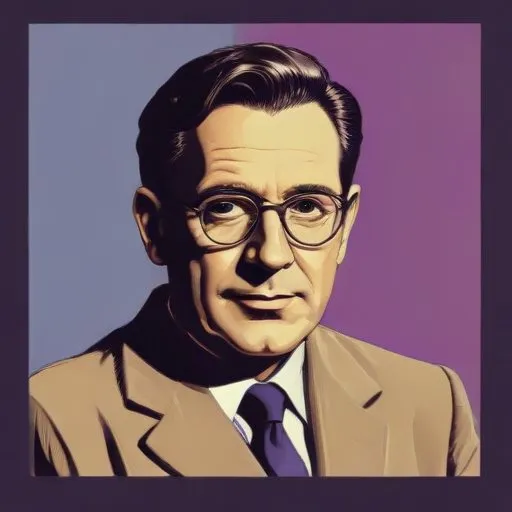
Developed the maser, a precursor to the laser, and made significant contributions to the development of quantum electronics.
James P. Gordon is renowned for his groundbreaking contributions to the fields of optics and quantum electronics, most notably for designing, analyzing, and constructing the first maser in 1954 as a doctoral student at Columbia University.
Gordon's work laid the foundation for the development of lasers, and his pioneering spirit paved the way for numerous breakthroughs in the field, including the quantal equivalent of Shannon's information capacity formula, the theory for the diffusion of atoms in an optical trap, and the discovery of the Gordon-Haus effect in soliton transmission.
Gordon was born on March 20, 1928, in Brooklyn, New York, and was raised in Forest Hills, Queens, and Scarsdale, New York.
He attended Scarsdale High School and Phillips Exeter Academy, graduating in 1945. Gordon then pursued a bachelor's degree from the Massachusetts Institute of Technology (MIT), which he received in 1949.
He joined the physics department of Columbia University as a graduate student, earning his master's degree and PhD degrees in physics in 1951 and 1955, respectively.
Gordon was a member of the National Academy of Engineering (since 1985) and the National Academy of Sciences (since 1988).
Gordon worked as a scientist at AT&T Bell Laboratories from 1955 until his retirement in 1996, serving as the head of the Quantum Electronics Research Department from 1958 to 1980.
He was married and had two children, and in his free time, he enjoyed sailing and playing the piano.
Gordon's work embodied the spirit of innovation and curiosity, driving the boundaries of human knowledge and understanding.
He believed in the importance of fundamental research, recognizing its potential to transform industries and improve human lives.
Gordon's contributions have had a profound impact on modern society, enabling the development of numerous technologies, including laser systems, fiber optic communications, and optical data storage.
His work has also inspired generations of scientists and engineers, fostering a culture of innovation and collaboration.
Gordon's legacy continues to inspire and influence the scientific community, with his pioneering work remaining a cornerstone of modern optics and quantum electronics.
His contributions have been recognized as a testament to the power of human ingenuity and the importance of fundamental research in shaping our understanding of the world.
99 Years Old
Developed the first working laser, revolutionizing industries from medicine to telecommunications. This invention transformed the way we live, work, and communicate.
Born in 1916
Developed theories on the Big Bang, cosmic microwave background radiation, and the universe's expansion, making groundbreaking contributions to our understanding of the cosmos.
Born in 1913
Developed theories on quantum electrodynamics and the behavior of hydrogen atoms, earning a Nobel Prize in Physics in 1955.
44 Years Old
A former professional footballer who played for various clubs, including Tottenham Hotspur, and later pursued a modeling career, appearing on the cover of numerous magazines.
