


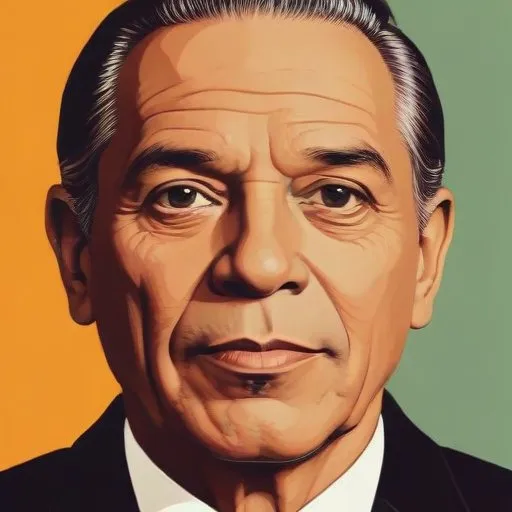
Inventor of the first machine that could rapidly and cheaply produce shoes, revolutionizing the shoe industry. His invention increased shoe production and made shoes more affordable for the masses.
Jan Ernst Matzeliger, a Surinamese-American inventor, is best known for his groundbreaking automated lasting machine that transformed the manufacturing of shoes. His innovative device enabled mass production of shoes, making them more affordable and accessible to the masses.
Matzeliger was born on September 15, 1852, in Paramaribo, Dutch Guiana (now Suriname). His father, Ernst Carel Martzilger jr., was a third-generation Dutchman of German descent, who owned and operated the Colonial Shipworks in Paramaribo. Matzeliger's mother was a house slave of African descent. At the age of 10, he was apprenticed in the Colonial Ship Works, where he demonstrated a natural aptitude for machinery and mechanics.
In 1871, Matzeliger left Dutch Guiana and worked as a mechanic on a Dutch East Indies merchant ship for several years. He eventually settled in Philadelphia, Pennsylvania, where he learned the shoe trade. By 1877, he had mastered the English language and moved to Massachusetts to pursue his interest in the shoe industry. He worked at the Harney Brothers Shoe factory, where he observed the labor-intensive process of shoemaking.
Matzeliger's automated lasting machine addressed the most challenging phase of shoemaking – the assembly of soles to the upper shoe. This innovative device enabled the production of shoes on a large scale, reducing labor costs and increasing efficiency. The machine's ability to tack and sew the two components together with precision and speed revolutionized the shoe industry.
The United Shoe Machinery Corporation was founded to manufacture Matzeliger's shoe-making devices. His invention transformed the shoe industry, making shoes more affordable and accessible to the masses. Matzeliger's legacy extends beyond the shoe industry, as his innovation paved the way for mass production in various industries.
Matzeliger's invention embodied his belief in the power of innovation to improve people's lives. He demonstrated that with determination and perseverance, individuals can overcome obstacles and create meaningful change.
Matzeliger's invention occurred during a time of significant industrial transformation in the United States. His automated lasting machine contributed to the growth of the shoe industry, which played a crucial role in the country's economic development.
Today, Matzeliger's legacy serves as a testament to the impact of innovation on society. His story inspires future generations of inventors and entrepreneurs to pursue their passions and create positive change.
Born in 1765
An American engineer revolutionized the cotton industry with a machine that simplified harvesting, making cotton production more efficient and profitable. This innovation had a significant impact on the economy and society.
Born in 1809
Co-founder of International Harvester, a pioneering manufacturer of agricultural machinery, revolutionizing farming with the mechanical reaper, increasing food production and transforming the industry.
Born in 1819
Invented the first practical sewing machine, revolutionizing the textile industry and transforming the way clothing was made. This innovation had a profound impact on the Industrial Revolution and daily life.
Born in 1768
Built America's first successful cotton mill, revolutionizing the textile industry and earning the nickname "Father of American Industry".
Born in 1908
Developed the transistor and pioneered superconductivity, revolutionizing modern electronics and earning two Nobel Prizes in Physics.
Born in 1847
A pioneer in innovation, credited with developing groundbreaking inventions that revolutionized the way people live and communicate, including the light bulb and phonograph.
Born in 1847
A Scottish-American engineer and academic credited with inventing the telephone, revolutionizing real-time communication. This innovation transformed the way people connect and conduct business.
Born in 1856
A pioneering engineer who harnessed the power of alternating current (AC) to transform the world's electrical systems, and is credited with developing groundbreaking technologies like radio communication and X-ray imaging.
