


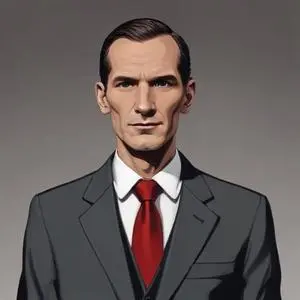
A Polish-American activist and academic who risked his life to expose the atrocities of the Holocaust to the Western world, particularly the existence of concentration camps.
Jan Karski, born Jan Romuald Kozielewski, was a Polish soldier, resistance fighter, and diplomat who risked his life to inform the Western Allies about the atrocities committed by the Nazi regime in occupied Poland during World War II. He is renowned for being one of the first individuals to report on the Holocaust, providing eyewitness accounts of the devastating conditions in the Warsaw Ghetto and the extermination camps on Polish soil.
Jan Karski was born on June 24, 1914, in Łódź, Poland, to a family of modest means. He grew up in a Catholic household with two brothers and a sister. After his father's early death, Karski's family struggled financially, but he persevered and pursued higher education. He studied law and diplomacy at the University of Łódź and later at the Jan Kazimierz University in Lviv.
In 1940, Karski joined the Polish resistance movement and became a courier for the Polish government-in-exile. He made multiple perilous journeys between occupied Poland and the West, carrying vital information about the Nazi regime's atrocities. His reports included eyewitness accounts of the Warsaw Ghetto and the extermination camps, including Auschwitz and Treblinka.
Karski's bravery and dedication earned him the trust of the Polish government-in-exile, and he became a key liaison between the Polish resistance and the Western Allies. He met with world leaders, including British Prime Minister Winston Churchill and US President Franklin D. Roosevelt, sharing his eyewitness testimony and advocating for immediate action to stop the genocide.
After the war, Karski settled in the United States and pursued a career in academia. He earned a doctorate in international relations from Georgetown University, where he later taught for over three decades. Karski's expertise in Polish history and international relations made him a sought-after scholar and lecturer.
Karski remained silent about his wartime missions until 1981, when he was invited to speak at a conference on the liberation of the concentration camps. This marked the beginning of his public recognition, and he went on to share his story in Claude Lanzmann's documentary film Shoah (1985).
Karski remained a devout Catholic throughout his life and believed in the importance of standing up against injustice. He was driven by a strong sense of morality and a commitment to humanity, often citing the phrase "I did what was necessary" when asked about his courageous actions during the war.
Karski's remarkable story serves as a testament to the power of courage, resilience, and moral conviction. His legacy continues to inspire generations, reminding us of the importance of standing up against oppression and fighting for human rights.
Born in 1871
Prolific writer of historical novels and adventure stories, also a talented landscape painter.
Born in 1882
Led the United States through the Great Depression and World War II, implementing a series of reforms known as the New Deal and helping to establish the country as a global superpower.
Born in 1878
The Soviet Union's ruthless leader who ruled with an iron fist, implementing policies that led to widespread famine and purges, while also playing a crucial role in defeating Nazi Germany in World War II.
Born in 1885
A renowned military leader who played a crucial role in World War II, particularly in the Allied victory in Europe, known for his bold tactics and unapologetic style.
Born in 1890
Led the Allied forces to victory in World War II and later served as President, maintaining peace and prosperity during the Cold War era. He's known for his strategic leadership and diplomatic skills.
Born in 1890
A French military leader who led the Free French Forces during WWII and later became President of France, known for his strong leadership and vision for a unified Europe.
