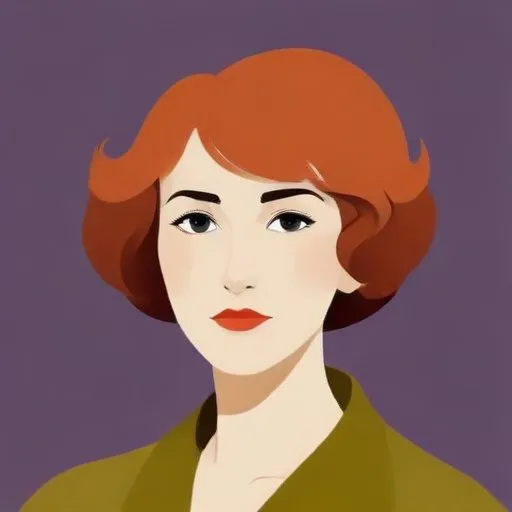
Jan Struther: The Creator of Mrs. Miniver
A Legacy Born from Ordinary Life
Jan Struther, the pen name of Joyce Anstruther, is remembered for her beloved character Mrs. Miniver and a collection of hymns, including the iconic "Lord of All Hopefulness." Struther's work has become an integral part of British literature, capturing the essence of ordinary life during extraordinary times.
Early Life and Inspirations
Born on June 6, 1901, in Buckinghamshire, England, Struther grew up in Whitchurch, surrounded by the rolling hills and countryside that would later influence her writing. Her childhood, spent at Miss Ironsides School in Kensington, laid the foundation for her creativity and interest in literature.
A Life of Love, Loss, and Literary Success
In 1923, Struther married Anthony Maxtone Graham, a broker at Lloyds of London, with whom she had three children. However, the marriage eventually failed, and she began an affair with Adolf Placzek, a Viennese art historian 12 years her junior. She married Placzek as her second husband, five years before her passing.
The Birth of Mrs. Miniver
Struther's writing career took off in the 1930s when she started contributing to
Punch magazine. Her work caught the attention of
The Times newspaper, where
Peter Fleming asked her to write a series of columns about an ordinary woman leading an ordinary life. The resulting character, Mrs. Miniver, was born in 1937 and quickly became a huge success.
From Columns to Cinema
The popularity of Mrs. Miniver led to the publication of Struther's columns in book form in 1939. On the outbreak of World War II, the book was adapted into a patriotic American film,
Mrs. Miniver, released in 1942, which won six Academy Awards, including Best Picture.
Awards and Accolades
Struther's work has been recognized with numerous awards and honors, including:
- Six Academy Awards for the film adaptation of Mrs. Miniver
- Award-winning hymns, including "Lord of All Hopefulness"
- Inclusion in the Oxford Dictionary of National Biography
Personal Milestones and Challenges
Struther's life was marked by both triumph and tragedy. Her final years were affected by severe depression, leading to a five-month stay in a psychiatric hospital. She underwent a mastectomy for breast cancer and eventually succumbed to the disease in New York in 1953, at the age of 52. Her ashes are buried beside her father in the family grave at St. John The Evangelist Church, in Whitchurch.
Legacy and Impact
Jan Struther's contributions to literature and music continue to inspire generations. Her character, Mrs. Miniver, has become an iconic representation of British resilience during World War II. Struther's hymns, including "Lord of All Hopefulness," remain popular in churches and cathedrals around the world.
Influence on Pop Culture
Struther's work has had a lasting impact on popular culture, with references to Mrs. Miniver appearing in:
- The Simpsons (her great-nephew, Ian Maxtone-Graham, was a co-executive producer)
- Film and television adaptations, including the 1942 film and a 2009 BBC Radio 4 drama
Quotes and Memorable Sayings
"I think Mrs. Miniver is myself, minus the more disagreeable qualities." - Jan Struther
Historical Context and Legacy
Jan Struther's life and work served as a reflection of the times in which she lived. Her writing captured the essence of British life during World War II, providing a relatable and humanizing perspective on the era. Her legacy continues to inspire and influence writers, musicians, and filmmakers to this day.
FAQ
What is Jan Struthers most famous literary work?
Jan Struthers most famous literary work is her character Mrs. Miniver, a fictional English housewife created during World War II. Mrs. Minivers diary was first published in The Times and later became a best-selling novel.
What inspired Jan Struther to create Mrs. Miniver?
Struther was inspired to create Mrs. Miniver during World War II, when she was struggling to cope with the challenges of wartime life. Mrs. Minivers diaries were a way for Struther to process her own experiences and emotions.
What themes did Jan Struther explore in her writing?
Struthers writing explores themes of love, family, war, and resilience. Her work is known for its wit, humor, and insight into the human experience.
What awards did Jan Struther receive for her writing?
Struther received numerous awards for her writing, including the Order of the British Empire (OBE) in 1941.
When did Jan Struther pass away?
Jan Struther passed away on September 20, 1953, at the age of 67, leaving behind a legacy in literature and journalism.