


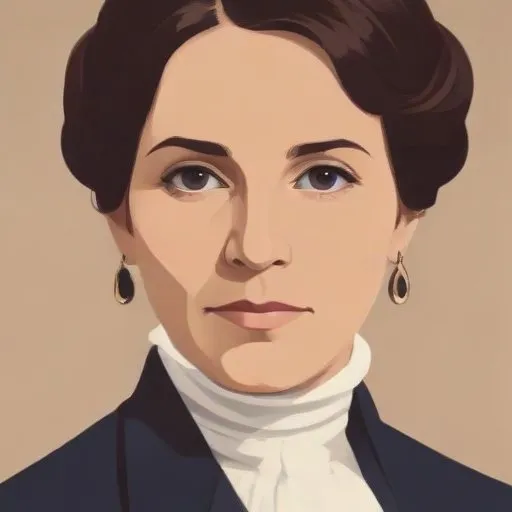
The wife of the 15th President of the United States, known for her strong character and influence on her husband's presidency, particularly during the tumultuous Kansas-Nebraska Act era. She was also a fashion icon of her time.
Jane Means Appleton Pierce, wife of Franklin Pierce, was the 15th First Lady of the United States, serving from 1853 to 1857. Despite her husband's prominent political career, Jane shied away from the public eye, leaving behind a legacy marked by her reclusive nature and strong convictions.
Born on March 12, 1806, in Hampton, New Hampshire, Jane was the third of six children to Congregationalist minister Jesse Appleton and his wife Elizabeth Means Appleton. The family moved to Brunswick, Maine, where Jane's father became president of Bowdoin College in 1807. It was here that she met her future husband, Franklin Pierce, a young congressman from New Hampshire.
The couple married in 1834, despite her family's misgivings. Jane's aversion to politics and her husband's rising career would become a recurring theme throughout their marriage.
Tragedy struck the Pierce family when their only surviving son, Benjamin, was killed in a train accident in 1853, just before Franklin's inauguration. This devastating loss sent Jane into a deep depression that would afflict her for the rest of her life.
Jane's strong Puritan beliefs led her to view the tragedy as divine retribution for the sins of her and her husband. This conviction, combined with her grief, made her reclusive and hesitant to engage in public life as First Lady.
During her husband's presidency, Jane rarely participated in public events, leaving many of her duties to be fulfilled by Abby Kent Means. Instead, she spent the first two years of Franklin's presidency in a period of mourning for her son.
Despite her reluctance, Jane did take an interest in the issue of abolitionism, attempting to influence her husband's decisions on the subject during her time as First Lady.
After Franklin's presidency, the couple traveled abroad for two years before settling in Massachusetts. Jane Pierce died of tuberculosis on December 2, 1863, leaving behind a legacy marked by her strong convictions and reclusive nature.
In contrast to her husband, who was outgoing, political, and a heavy drinker, Jane's reserved nature and aversion to politics made her an unlikely First Lady. Despite this, her story serves as a testament to the complexities of women's roles in 19th-century American politics.
Born in 1804
The 14th President of the United States, a northern Democrat who struggled to find a compromise on slavery, ultimately signing the Kansas-Nebraska Act, which allowed new states to decide on slavery. He's often remembered for his inability to prevent the Civil War.
Born in 1744
The wife of a Founding Father and early President, she was a strong advocate for women's rights and education, leaving behind a legacy of influential letters and diaries.
Born in 1775
The wife of President John Quincy Adams, she was a strong supporter of her husband's political career and played a significant role in his presidential campaign, becoming a popular figure in Washington society.
Born in 1767
The wife of the seventh U.S. President, she was a strong supporter of her husband's political career and played a significant role in shaping his public image. She was also known for her kindness and generosity to the poor and slaves.
