


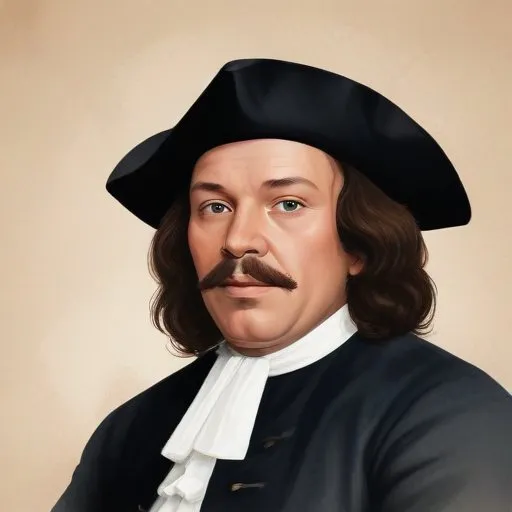
Founder of the first permanent Dutch settlement in South Africa, establishing a refreshment station at the Cape of Good Hope that eventually grew into the city of Cape Town. He played a crucial role in the Dutch colonization of South Africa.
Jan van Riebeeck, a Dutch navigator, ambassador, and colonial administrator, is renowned for establishing the first Dutch settlement in South Africa, which would later become Cape Town. As the commander of the initial settlement, he played a pivotal role in shaping the country's history and paving the way for Dutch colonization in the region.
Born on April 21, 1619, in Culemborg, Netherlands, Jan van Riebeeck was the son of a surgeon. He grew up in Schiedam, where he married Maria de la Queillerie in 1649. The couple had eight or nine children, although most of them did not survive infancy.
Van Riebeeck joined the Dutch East India Company (VOC) in 1639, where he served in various capacities, including as an assistant surgeon in the Batavia and the head of the VOC trading post in Tonkin, Indochina. However, he was dismissed from the latter position in 1645 due to conducting personal trade.
During his return voyage from Tonkin, van Riebeeck stayed for 18 days at the Cape of Good Hope, where he recognized the strategic importance of the location. He advocated for the establishment of a refreshment station at the Cape, which would provide a vital stopover for Dutch ships traveling between the Netherlands and the East Indies.
In 1643, van Riebeeck traveled to Japan, where he proposed selling hides of South African wild animals to the Japanese market. This idea further solidified his vision for a Dutch presence at the Cape.
In 1650, the VOC requested van Riebeeck to undertake the command of the initial Dutch settlement in South Africa. He departed from Texel on December 24, 1651, with three ships: the Drommedaris, the Goede Hoope, and the Reijger.
Van Riebeeck landed in Table Bay on April 6, 1652, with 82 men and 8 women, including his wife Maria. He established the first Dutch settlement, which would later become Cape Town, and played a crucial role in shaping the region's history.
Jan van Riebeeck's legacy extends far beyond the establishment of Cape Town. He facilitated the Dutch colonization of South Africa, which had a profound impact on the region's politics, economy, and culture.
Today, van Riebeeck is remembered as a pioneering figure in South African history, and his name is still celebrated in Cape Town. Despite controversies surrounding his role in the colonization of South Africa, his contributions to the country's development are undeniable.
Jan van Riebeeck's life and legacy serve as a testament to the power of vision, perseverance, and determination. His contributions to South African history continue to reverberate, making him an enduring figure in the country's narrative.
Born in 1639
The founder of Stellenbosch and the first governor of the Dutch Cape Colony, who established a successful settlement and explored the region, expanding Dutch influence in South Africa.
