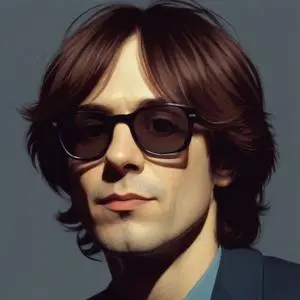
Jarvis Cocker: The Britpop Icon and Renaissance Man

The Voice of a Generation
Jarvis Cocker is known for being the founder, frontman, and lyricist of the iconic Britpop band Pulp, which dominated the UK music scene in the mid-1990s. With his witty lyrics, eclectic style, and charismatic stage presence, Cocker became the quintessential figurehead of the Britpop movement.
Early Life and Influences
Born on September 19, 1963, in Sheffield, England, Cocker grew up in a predominantly female household after his father, Mac Cocker, left the family when Jarvis was just seven years old. This unusual upbringing had a profound impact on Cocker's artistic vision, as he often credits his mother and sister for shaping his perspective on femininity and relationships. Cocker's father, a DJ and actor, later reunited with his children in the 1990s, and Jarvis has spoken publicly about the complexities of their reconciliation.
Rise to Fame with Pulp
Formed in 1978, Pulp went through numerous lineup changes before achieving mainstream success in the 1990s. Cocker's poetic lyrics, often focusing on British suburban life, relationships, and social commentary, resonated with a generation of disenchanted youth. Pulp's breakthrough album,
His 'n' Hers, released in 1994, was followed by the critically acclaimed
Different Class, which catapulted the band to international stardom. The album's hit singles, including "Common People" and "Disco 2000," remain anthems of the Britpop era.
Solo Career and Radio Ventures
After Pulp's hiatus in 2002, Cocker embarked on a solo career, releasing his debut album,
Jarvis, in 2006. He has since released two more solo albums,
Further Complications and
Room 29, which have garnered critical acclaim for their introspective lyrics and experimental arrangements. Between 2010 and 2017, Cocker presented the BBC Radio 6 Music show
Jarvis Cocker's Sunday Service, which showcased his eclectic taste in music and his knack for storytelling.
Awards and Recognition
Cocker has received numerous awards and nominations for his work with Pulp and as a solo artist. He has won two Brit Awards, including Best British Video for "Common People," and has been nominated for several Mercury Music Prize and Q Awards. In 2017, Cocker was appointed an Officer of the Order of the British Empire (OBE) for his services to music.
Legacy and Impact
Jarvis Cocker's influence on British music and culture is undeniable. He has inspired a generation of musicians, from Arctic Monkeys to Kaiser Chiefs, and continues to push the boundaries of artistic expression. As a true Renaissance man, Cocker embodies the spirit of creative experimentation, reminding us that art should always challenge and inspire.
Philosophical Contributions and Beliefs
Cocker's lyrics often touch on themes of social inequality, relationships, and personal identity. He has spoken about the importance of empathy and understanding in his creative process, saying, "I think that's what art is about – trying to understand other people's perspectives, and trying to get other people to understand yours."
Personal Milestones and Key Life Events
- 1994: Releases His 'n' Hers with Pulp, marking the band's breakthrough
- 1995: Reunites with his father, Mac Cocker, after 30 years
- 2002: Pulp goes on hiatus, leading to Cocker's solo career
- 2010: Begins presenting Jarvis Cocker's Sunday Service on BBC Radio 6 Music
- 2017: Receives an OBE for services to music
Controversies and Public Perception
Cocker has always been unapologetically himself, refusing to conform to industry expectations or media scrutiny. In the 1990s, he was often criticized for his perceived arrogance and eccentricity, but these traits have since become an integral part of his artistic persona.
Quotes and Memorable Sayings
- "I think that's what art is about – trying to understand other people's perspectives, and trying to get other people to understand yours."
- "I'm not a rebel, I'm just someone who has a different point of view."
Influence on Modern Society
Jarvis Cocker's music, fashion, and artistic vision have had a lasting impact on British popular culture. He continues to inspire new generations of musicians, artists, and fans, cementing his status as a cultural icon of the 1990s and beyond.