


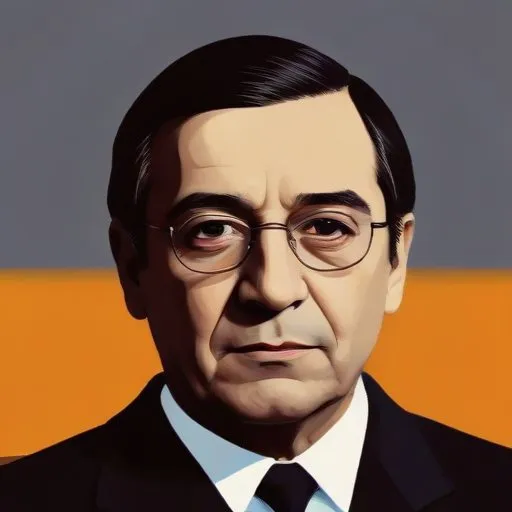
A Spanish jurist and politician who played a key role in drafting the Spanish Constitution of 1812, also known as La Pepa, and was a strong advocate for liberal reforms.
Javier de Burgos, a renowned Spanish jurist, politician, journalist, and translator, is best known for his pivotal role in shaping Spain's administrative system, particularly the 1833 territorial division that transformed the country into a provincial structure. His innovative approach to governance and dedication to centralization earned him a lasting legacy in Spanish history.
Born on October 22, 1778, in Motril, Spain, into a noble but impoverished family, Burgos was initially destined for a career in the Roman Catholic Church. However, he abandoned his studies in Granada to pursue law in Madrid. This decision marked the beginning of his remarkable journey, which would eventually lead him to become a prominent figure in Spanish politics.
During the Peninsular War (1808-1814), Burgos sided with King Joseph I, earning him the label of afrancesado. This allegiance led to his involvement in administrative duties in Andalusia, making him an enemy of the House of Bourbon. In 1812, he fled to Paris, where he furthered his academic training by studying the Classics and translating the works of Horace into Castilian.
Burgos' translation of Horace was met with criticism, particularly from Andrés Bello, who deemed him a poor translator but an excellent commentator. Undeterred, Burgos published a revised version in 1844, which, despite its flaws, remains a valuable reference due to its use of the sapphic stanza with free verse.
In 1819, Burgos returned to Madrid and became the editor of El Imparcial, a prominent newspaper that served as a platform for moderate liberalism and afrancesados. During this period, he authored multiple volumes of his Biografia universal, cementing his reputation as a prolific writer.
Burgos' influence in politics led to his appointment as undersecretary of State in Francisco Cea Bermúdez' Ministry. Under the regency of Maria Christina, he played a crucial role in the 1833 territorial division of Spain, advocating for a centralized government and provincial structure. This radical reform conflicted with the self-government status held by the Basque districts, particularly Navarre, sparking controversy and debate.
Javier de Burgos' legacy is marked by his unwavering commitment to centralization and his profound impact on Spain's administrative system. While his design for provincial division was met with resistance, it paved the way for future generations to build upon and refine. Today, Burgos is remembered as a visionary who dared to challenge the status quo, leaving an indelible mark on Spanish history.
