


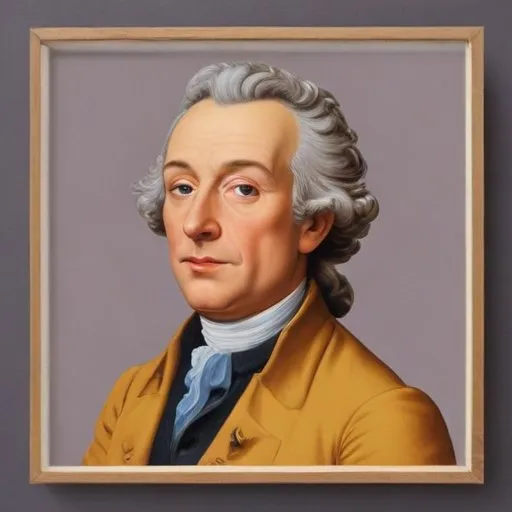
A prominent 18th-century French painter and engraver, renowned for his exquisite still-life compositions and portraits of Louis XV's royal hunts, showcasing remarkable attention to detail and realism.
Jean-Baptiste Oudry is renowned for his breathtakingly realistic paintings of animals and hunt scenes, which continue to captivate art enthusiasts to this day. As a French Rococo painter, engraver, and tapestry designer, Oudry's work epitomizes the era's emphasis on elegance, refinement, and a deep connection with nature.
Born on March 17, 1686, in Paris, France, Oudry was the son of Jacques Oudry, a painter and art dealer, and Nicole Papillon, a relative of the esteemed engraver Jean-Baptiste-Michel Papillon. This rich artistic heritage paved the way for Oudry's own creative journey.
Oudry's early years were marked by his training at the Académie de Saint-Luc, where he honed his skills under the guidance of his father and later became an assistant professor in 1714. His talent and dedication earned him the prestigious title of professor at the Académie royale de peinture et de sculpture in 1743.
Oudry's artistic repertoire extends far beyond his celebrated animal paintings. He was a skilled portraitist, still-life painter, and designer of tapestries and engravings. His work in these mediums showcases his boundless creativity and ability to adapt to various art forms.
Oudry's most notable contribution to the art world lies in his naturalistic depictions of animals. His paintings of game and hunt scenes, such as "The Stag Hunt" and "The Deer Hunt," exemplify his attention to detail and ability to capture the dynamic movement of his subjects.
Oudry's commitment to realism was unparalleled in his time. He spent countless hours studying animals in their natural habitats, taking meticulous notes and sketches to ensure that his paintings were accurate and lifelike.
Jean-Baptiste Oudry's artistic legacy extends beyond his own work. He influenced a generation of French painters, including François Desport and Jean-Honoré Fragonard, and his designs continue to inspire artists and designers to this day.
Oudry's paintings can be found in prominent museums and private collections worldwide, including the Louvre, the Metropolitan Museum of Art, and the Wallace Collection. His work remains a testament to the power of art to inspire and captivate, a true reflection of his enduring legacy.
"The art of painting is the art of observing nature." - Jean-Baptiste Oudry
This quote encapsulates Oudry's dedication to capturing the essence of nature in his work, a philosophy that continues to inspire artists and art enthusiasts alike.
Born in 1703
A prominent artist of the Rococo style, known for his delicate and ornate paintings, often depicting mythological and pastoral scenes, as well as designing sets for the Paris Opera.
Born in 1732
A prolific Rococo painter and etcher, renowned for his delicate, whimsical, and often erotic works that capture the carefree spirit of 18th-century French aristocracy. His art often featured lush landscapes, gentle colors, and playful scenes of love and leisure.
Born in 1748
A French painter and illustrator who revolutionized Neoclassicism with his realistic and emotive works, creating iconic pieces like "Oath of the Horatii" and "Napoleon Crossing the Alps".
Born in 1780
A renowned French Neoclassicist painter and illustrator, celebrated for his exquisite portraits and historical scenes that epitomize elegance and refinement. His work continues to inspire artists and art enthusiasts alike.
Born in 1791
A Romantic-era master of dramatic and emotionally charged art, known for his powerful depictions of horses and the human experience.
Born in 1798
A Romantic-era master of expressive brushstrokes and vivid color, creating iconic works that captured the drama and emotion of historical and literary scenes.
