


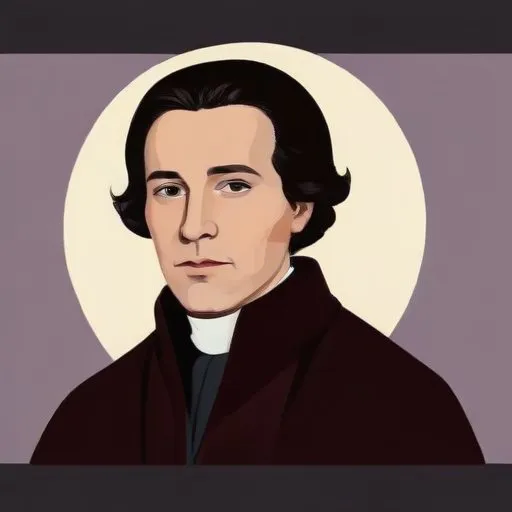
Founded the Institute of the Brothers of the Christian Schools, a Catholic religious teaching congregation, and is considered the patron saint of teachers, known for his innovative and compassionate approach to education.
Jean-Baptiste de La Salle, a French priest and educational reformer, is renowned for dedicating his life to the education of poor and marginalized children in 17th-century France. Through his tireless efforts, he founded the Institute of the Brothers of the Christian Schools, leaving an indelible mark on education and earning him the title of patron saint of teachers of youth.
La Salle was born on April 30, 1651, in Reims, France, to a wealthy family. His mother, Nicolle Moët de Brouillet, hailed from a noble family that operated a successful winery business. La Salle's family encouraged his early interest in the priesthood, and he was tonsured at the age of eleven, signaling his intention to devote his life to the service of God.
La Salle pursued higher education at the College des Bons Enfants, where he earned a Master of Arts degree in 1669. He then entered the Seminary of Saint-Sulpice in Paris, where he studied theology and philosophy. Following the death of his parents in 1671 and 1672, La Salle was forced to leave the seminary to care for his four brothers and two sisters.
In 1679, La Salle founded the Institute of the Brothers of the Christian Schools, a congregation of lay brothers dedicated to providing free education to the poor and marginalized. This pioneering effort marked a significant departure from the traditional educational systems of the time, which catered primarily to the wealthy.
La Salle's innovative approach focused on providing practical education, emphasizing the development of vocational skills, and promoting social mobility. He established a network of schools throughout France, which became a beacon of hope for countless young people seeking a better life.
La Salle's educational philosophy was deeply rooted in his Christian faith and his conviction that every individual has inherent dignity and worth. He believed that education should be accessible to all, regardless of social status or economic background.
La Salle's emphasis on the importance of education as a means of social transformation was revolutionary for his time. He advocated for a student-centered approach, where teachers acted as facilitators rather than authoritarian figures. This progressive philosophy remains a cornerstone of modern education.
In recognition of his tireless efforts and groundbreaking contributions to education, La Salle was canonized as a saint by the Catholic Church in 1900. Today, he is revered as the patron saint of teachers of youth, a testament to his enduring legacy in the field of education.
La Salle's pioneering work in education has had a profound impact on modern society. His emphasis on accessible education has inspired countless educators and social reformers throughout history.
Today, the Brothers of the Christian Schools continue to operate a global network of schools, serving millions of students worldwide. La Salle's vision of education as a catalyst for social transformation remains a beacon of hope, inspiring generations to strive for a more equitable and just society.
"Education is not just about imparting knowledge, but about forming good citizens, capable of contributing to the common good."
"The poor are not only the object of our charity, but also the source of our wisdom."
Jean-Baptiste de La Salle's remarkable life and legacy serve as a powerful reminder of the transformative power of education. His visionary approach has inspired generations of educators, social reformers, and individuals committed to creating a more just and equitable society.
As we reflect on La Salle's remarkable achievements, we are reminded of the importance of education as a fundamental human right, essential for individual and collective development. His legacy continues to inspire and empower, a testament to the enduring power of compassion, dedication, and visionary leadership.
