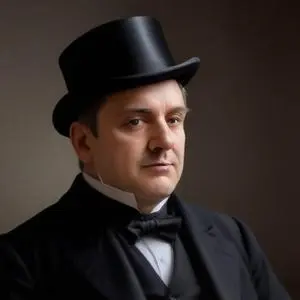
Jean-Martin Charcot: The Father of French Neurology
Pioneering Work in Neurology and Hypnosis
Jean-Martin Charcot, a French neurologist, is renowned for his groundbreaking contributions to the field of neurology, particularly in the study of hypnosis and hysteria. As the founder of modern neurology, Charcot's work has left an indelible mark on the medical community, earning him the title "the Napoleon of the neuroses."
Early Life and Education
Born on November 29, 1825, in Paris, France, Charcot was drawn to the field of medicine from a young age. He studied at the University of Paris, where he earned his medical degree in 1853. Charcot's early interest in neurology was sparked by his work under the tutelage of Duchenne de Boulogne, a prominent French neurologist.
Career Highlights and Major Works
Charcot's career was marked by numerous achievements, including:
- Establishing the first neurology clinic in Europe at Salpêtrière Hospital in 1882
- Naming and describing multiple sclerosis, a disease he referred to as "sclérose en plaques"
- Identifying the three signs of multiple sclerosis, now known as Charcot's triad: nystagmus, intention tremor, and telegraphic speech
- Conducting extensive research on hysteria, including his work with patient Louise Augustine Gleizes
Influence on Modern Society
Charcot's work has had a profound impact on modern society, influencing the development of neurology, psychology, and psychiatry. His contributions have paved the way for significant breakthroughs in understanding and treating neurological disorders.
Philosophical Contributions and Beliefs
Charcot's philosophical approach to neurology was rooted in his belief in the importance of empirical observation and clinical research. He was known for his atheistic views, which did not influence his scientific work.
Personal Milestones and Key Life Events
Charcot married Madame Durvis, a wealthy widow, in 1864 and had three children: Jeanne, Jean-Paul, and Jean-Baptiste. His son, Jean-Baptiste, would go on to become a doctor and a famous polar explorer.
Legacy and Historical Context
Charcot's legacy extends far beyond his own lifetime. He has been hailed as the "father of French neurology" and one of the pioneers of neurology worldwide. His work has inspired generations of neurologists, psychiatrists, and researchers, shaping the course of medical history.
Comparative Analysis with Contemporaries
Charcot's work was contemporaneous with that of other prominent neurologists, including William Gowers and Hughlings Jackson. While each made significant contributions to the field, Charcot's work stands out for its breadth and depth, earning him a unique position in the history of neurology.
Quotes and Memorable Sayings
Charcot's teachings and writings are peppered with insightful quotes, including:
"La théorie, c'est bon, mais ça ne vaut pas une expérience." (Theory is good, but it's not worth an experience.)
This quote reflects his emphasis on the importance of empirical observation and clinical experience in understanding neurological disorders.
Awards and Honors
Charcot's contributions to neurology have been recognized through various awards and honors, including the prestigious title of Professor of Anatomical Pathology at the University of Paris.
Impact on Pop Culture
Charcot's work has inspired literary and artistic works, including the character of Dr. Charcot in Joséphin Péladan's novel "Le Docteur Charcot" and the play "Charcot's Hysteria" by Marialyse Portuga.
Trivia and Fun Facts
Did you know that Charcot was an accomplished artist and musician in his spare time? He was known for his talent in painting and playing the piano.
Visual Timeline and Milestones
This visual timeline highlights key milestones in Charcot's life and career, from his early education to his groundbreaking contributions to neurology.
FAQ
What were Jean-Martin Charcots contributions to the field of neurology?
Charcot was a pioneering French neurologist and psychologist, known for his work on hysteria, hypnosis, and the discovery of multiple sclerosis, which significantly advanced the field of neurology.
How did Jean-Martin Charcots work impact the understanding of hysteria?
Charcots research on hysteria, which he believed was a psychological condition rather than a physical one, led to a greater understanding of the condition and its treatment.
What was Jean-Martin Charcots role in the development of psychotherapy?
Charcots work on hypnosis and suggestion laid the groundwork for the development of psychotherapy, influencing prominent psychologists such as Sigmund Freud.
How did Jean-Martin Charcots early life influence his career?
Charcots early life, marked by a strong educational foundation and early interest in medicine, laid the groundwork for his successful career as a neurologist and psychologist.
What was Jean-Martin Charcots legacy in the field of neurology?
Charcots legacy in neurology is one of significant contribution, marked by his groundbreaking research and discoveries, which continue to influence the field today.