


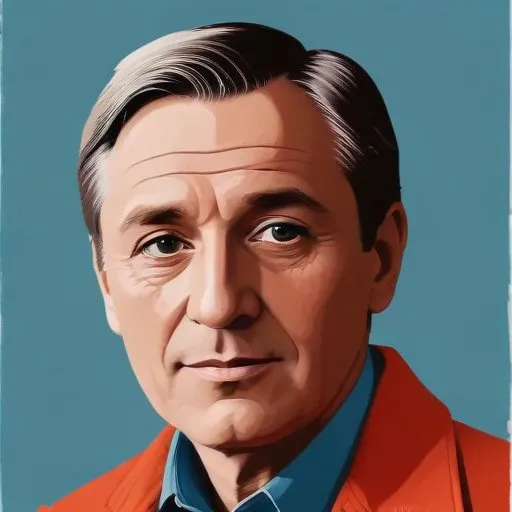
A pioneering filmmaker who explored Quebec's cultural identity through his thought-provoking documentaries and feature films. He's credited with shaping the country's cinematic landscape.
Jean Pierre Lefebvre is widely regarded as the godfather of independent Canadian cinema, and for good reason. With a career spanning over five decades, he has made an indelible mark on the film industry, inspiring a generation of young, independent filmmakers.
Born on August 17, 1941, in France, Lefebvre moved to Canada and studied literature at the University of Montreal. He later taught for two years at the Jesuit-run Loyola College in Montreal, now part of Concordia University. It was during this time that he began writing as a film critic, first for Quartier Latin, then for Sequences and Objectif.
Lefebvre's foray into filmmaking began with a short drama, followed by three independent features. He then joined the National Film Board of Canada (NFB) and made two films, including the 1968 feature My Friend Pierrette, costarring Raul Duguay and produced by Clement Perron.
It was during his tenure at the NFB that Lefebvre was asked to head the French-language fiction studio. He went on to create the Premières Oeuvres series, designed to produce low-budget shorts and features. Although the initiative was terminated, Lefebvre didn't let that deter him. He left to form his own production company, Cinak, with his wife and editor, Marguerite Duparc.
Lefebvre's work has been recognized globally, earning him numerous awards and accolades. His film Don't Let It Kill You (1967) was the first Canadian film to be invited to the Cannes Film Festival. He repeated this success when he received the International Critics Prize for Les fleurs sauvages (1982) and had his film Le jour S... (1984) screened in the Un Certain Regard section.
In 1974, Lefebvre's film The Last Betrothal won the prestigious Prix de l'Organisation catholique internationale du cinéma.
Lefebvre's most notable work is perhaps the Abel Trilogy, consisting of three feature films: Il ne faut pas mourir pour ça (1967), Le Vieux pays où Rimbaud est mort (1977), and Aujourd'hui ou jamais (1997). These films follow the recurring character of Abel Gagn, cementing Lefebvre's status as a master storyteller.
Jean Pierre Lefebvre's impact on the film industry cannot be overstated. He has inspired a generation of filmmakers, and his work continues to be celebrated and studied around the world. His legacy is a testament to the power of independent filmmaking and the importance of preserving cultural diversity.
Today, Lefebvre remains an integral part of the Canadian film industry, continuing to write, produce, and direct films that captivate audiences and inspire new generations of filmmakers.
85 Years Old
Acclaimed filmmaker behind thought-provoking, often humorous explorations of Quebec's culture and society, earning numerous awards and nominations. Known for his witty, insightful storytelling and nuanced character portrayals.
82 Years Old
Acclaimed filmmaker behind iconic Canadian TV dramas and documentaries, exploring social issues and human stories. 14
98 Years Old
A pioneering filmmaker known for his innovative documentary-style approach and influential work in Quebec's cinematic landscape, leaving a lasting impact on Canadian cinema.
97 Years Old
Acclaimed filmmaker behind poignant, socially conscious dramas that explored the human condition, often focusing on Quebec's cultural identity. His works continue to resonate with audiences today.
96 Years Old
A pioneering filmmaker who explored Quebec's cultural identity through his work, leaving a lasting impact on Canadian cinema.
99 Years Old
A renowned filmmaker behind numerous documentaries and feature films that explore Quebec's culture and identity, earning him a reputation as a pioneer of Canadian cinema.
79 Years Old
A Quebecois filmmaker celebrated for his offbeat, humorous, and often surreal cinematic style, which has garnered a devoted cult following.
