


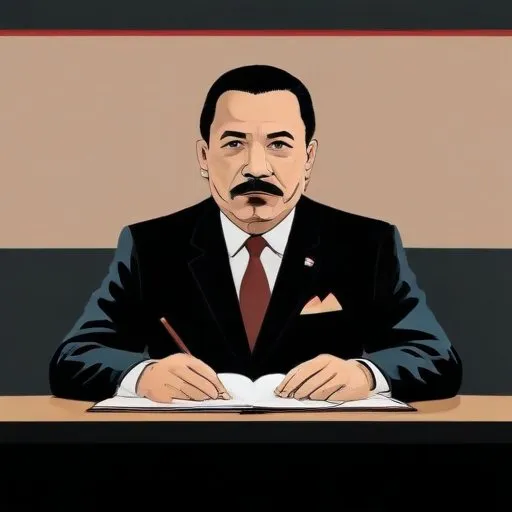
A former African Union Commission Chairman and Gabon's foreign minister, known for his diplomatic efforts to resolve African conflicts and promote regional integration.
Jean Ping, a renowned Gabonese diplomat and politician, is best known for being the first individual of Chinese descent to lead the executive branch of the African Union, serving as the Chair of the African Union Commission from 2008 to 2012. Throughout his illustrious career, he has held various international positions, including President of the United Nations General Assembly and Minister of State and Minister of Foreign Affairs, Cooperation, and Francophonie of the Gabonese Republic.
Born on November 24, 1942, in Ombou, a small town on the Fernan Vaz lagoon, south of Port-Gentil, Gabon, Ping's father, Cheng Zhiping, was a Chinese laborer who migrated to Gabon in the 1920s. Ping's mother, Germaine Anina, was a Gabonese daughter of a tribal chief. He was encouraged by his father to pursue higher education in France, where he earned a scholarship from the Gabonese government to study economic science at the University of Paris 1 Panthéon-Sorbonne.
Ping began his international career in 1972 as an international civil servant at UNESCO in Paris. He later became Gabon's Permanent Delegate to UNESCO from 1978 to 1984, before entering politics in his country. In 1993, he served as President of OPEC, and in 2004, he was elected as the 59th President of the United Nations General Assembly.
As Chair of the African Union Commission, Ping worked towards strengthening regional integration, promoting economic development, and enhancing the organization's global influence. He played a key role in shaping the African Union's agenda, particularly in areas such as peace and security, human rights, and sustainable development.
Ping has been married to Jeanne-Thérèse, of Italo-Ivorian origin, and has eight children from previous relationships, including two with Pascaline Bongo, daughter of former Gabonese President Omar Bongo. He also has children with Marie-Madeleine Liane.
In 2016, Ping ran for president against incumbent Ali Bongo, but lost the election. Despite this setback, he remains a respected figure in Gabonese politics and international diplomacy.
Ping has received numerous awards and honors for his contributions to international relations, including the Grand Cross of the National Order of Merit of Gabon and the Grand Officer of the National Order of the Republic of Côte d'Ivoire.
As a prominent figure in African politics and international diplomacy, Ping's leadership and vision have inspired a new generation of leaders and policymakers. His commitment to promoting regional integration, economic development, and human rights has left a lasting impact on the African continent and beyond.
In the context of African history, Ping's achievements mark a significant milestone in the continent's quest for self-determination and international recognition. His legacy serves as a testament to the power of leadership and diplomacy in shaping the course of international relations.
90 Years Old
The President of Gabon from 1967 to 2009, who ruled with an iron fist, suppressing opposition and amassing vast wealth, while maintaining close ties with French leaders. He's infamous for his corrupt and authoritarian regime.
93 Years Old
The second President of Cameroon, ruling since 1982, known for maintaining power through a combination of repression and strategic governance, while also overseeing significant economic growth and development.
Born in 1926
The 3rd President of Senegal, a renowned academic and politician, served from 2000 to 2012, implementing economic reforms and promoting regional stability. He's known for his efforts to modernize Senegal's infrastructure and economy.
