


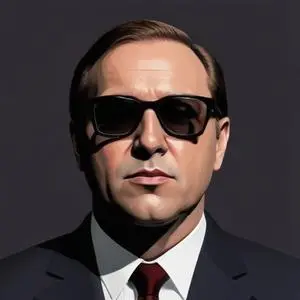
Former Enron CEO who orchestrated one of the largest corporate frauds in history, leading to the company's bankruptcy and widespread financial devastation.
Jeffrey Skilling, a name synonymous with corporate greed and financial manipulation, is known for his instrumental role in the Enron scandal, one of the most infamous cases of corporate fraud in history. As the CEO of Enron, Skilling's aggressive business practices and accounting schemes led to the company's catastrophic collapse, resulting in billions of dollars in losses and thousands of job losses.
Born on November 25, 1953, in Pittsburgh, Pennsylvania, Skilling grew up in a middle-class family with three siblings. His father, Thomas Ethelbert Skilling, Jr., worked as a sales manager for an Illinois valve company. Skilling's early interest in business was evident when he worked at a local TV station, WLXT-TV channel 60, at the age of 16.
Skilling earned a Bachelor's degree in industrial management from Purdue University in 1975 and later obtained an MBA from Harvard Business School in 1979. He began his career as a consultant at McKinsey & Company, where he quickly rose through the ranks, becoming a partner in 1987. Skilling's expertise in energy trading and his ability to identify opportunities for growth caught the attention of Enron's CEO, Kenneth Lay, who recruited him to join the company in 1990.
As Enron's CEO from 2000 to 2001, Skilling aggressively pursued a business strategy focused on energy trading and derivatives. He implemented various accounting schemes, including mark-to-market accounting, which allowed Enron to report inflated profits. Skilling's tactics resulted in Enron's stock price soaring, making him a Wall Street darling. However, his actions ultimately led to Enron's bankruptcy in 2001, wiping out thousands of jobs and more than $70 billion in shareholder value.
In 2006, Skilling was indicted on 35 counts of conspiracy, fraud, and insider trading. He was found guilty on 19 counts and sentenced to 24 years in prison, with a $45 million fine. The conviction was upheld on appeal, but Skilling's sentence was later reduced to 14 years after the U.S. Department of Justice reached a deal with him. Skilling served 12 years in prison before being released in 2019.
Skilling's business philosophy was built on the idea of taking bold risks and pushing the boundaries of what was considered acceptable. He believed in the "greater fool theory," which posits that there will always be someone willing to buy an asset at a higher price, regardless of its underlying value. This philosophy led to Enron's aggressive pursuit of growth, but ultimately contributed to the company's downfall.
The Enron scandal led to widespread calls for corporate governance reform and stricter accounting regulations. Skilling's actions have been cited as a prime example of the dangers of unchecked corporate greed and the importance of ethical business leadership. His legacy serves as a cautionary tale for business leaders and investors alike, highlighting the importance of transparency and accountability in corporate decision-making.
84 Years Old
Former CEO of Enron, led the company to massive success before its fraudulent collapse, resulting in one of the largest corporate scandals in history.
