


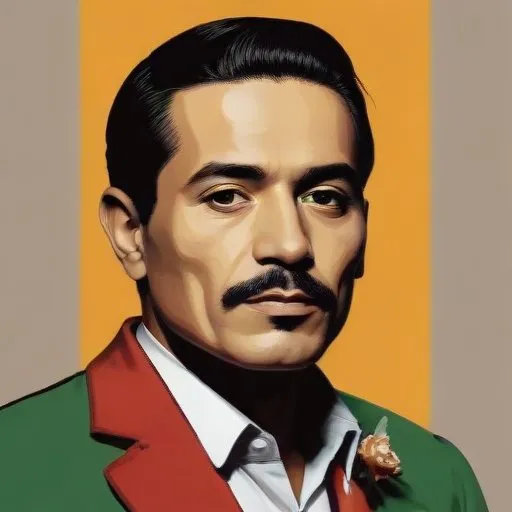
A Mexican artist and collector who amassed a vast collection of art and artifacts, showcasing the country's rich cultural heritage. He's most known for his contributions to preserving and promoting Mexican art and history.
Jess Reyes Ferreira, also known as Chucho Reyes, was a Mexican self-taught artist and antiques collector, best known for his unique artwork on crêpe paper, which he initially created as a way to decorate wrapping paper for his antique store.
His artistic talent was eventually recognized, and his crêpe paper artworks became popular in their own right, paving the way for a successful art career that spanned over half a century.
Born on October 17, 1880, in Guadalajara, Mexico, Jess Reyes Ferreira grew up in a culturally rich environment. His family was known for their eccentricity and love for art, which greatly influenced his early life.
He was initially homeschooled by his father, Buenaventura Reyes y Zavala, and later attended the Liceo de Varones, where he developed his artistic skills through art classes.
Ferreira's artistic journey began while working at a chocolate factory, where he became fascinated by the intriguing patterns created by grease on wrapping paper. This sparked an interest in art, and he eventually became an apprentice at the Loreto y Ancira lithography and print shop in 1894.
Later, as an antiques dealer, Ferreira began painting on crêpe paper to decorate wrapping paper for his store. This humble beginning led to the development of his signature style, characterized by simple yet evocative works that would eventually earn him recognition.
Ferreira's artwork finally gained recognition in 1950, with his first individual exhibition in 1967 at the prestigious Palacio de Bellas Artes. Despite being self-taught, his art was praised by renowned artists and architects of the time, who appreciated his unique aesthetic.
Ferreira's contributions to the art world extend beyond his own artistic creations. He was an early exponent of the appreciation of Mexican colonial art, folk art, and handicrafts, which he promoted through his antique store.
Ferreira's childhood home, a typical Guadalajara house with a central courtyard, is now the Museo de los Titeres (Marionette Museum). His life was marked by a dedication to his art and antiques business, which he continued to pursue well into his later years.
Despite his success, Ferreira's life was not without its challenges. He faced criticism for his lack of formal training, with some dismissing his work as mere folk art. However, his perseverance and passion for art ultimately earned him a place in Mexico's artistic heritage.
Ferreira's legacy extends beyond his own artwork. He played a significant role in promoting Mexican cultural heritage and folk art, inspiring future generations of artists and art enthusiasts.
His story serves as a testament to the power of creativity and perseverance, demonstrating that artistic talent can thrive even in the most unexpected places.
Today, Jess Reyes Ferreira's artwork continues to inspire and delight audiences, leaving behind a lasting legacy in the world of Mexican art and culture.
Born in 1886
A prominent figure in Mexican muralism, creating large-scale public artworks that often depicted the country's history and social issues, blending realism with symbolism.
Born in 1907
A Mexican artist who created vibrant, emotional, and often unsettling paintings that explored her own experiences with physical and emotional pain, as well as her cultural heritage.
Born in 1883
A prominent figure in the Mexican muralist movement, creating large-scale public artworks that often critiqued societal norms and politics. His vibrant, emotive style continues to inspire artists and activists today.
Born in 1896
A prominent figure in Mexican muralism, known for his large-scale public artworks that often depicted social and political themes, blending realism with dynamic composition.
Born in 1904
A Mexican painter and illustrator celebrated for his vibrant, stylized depictions of indigenous cultures and his influential role in shaping the visual identity of Mexico's modern art movement.
