


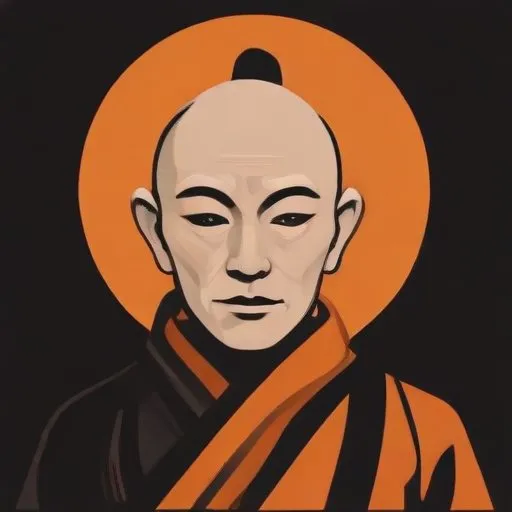
A 13th-century Buddhist monk who wrote influential poetry and compiled a comprehensive history of Japan, earning him a revered place in Japanese literary and cultural heritage.
Jien, a renowned Japanese poet, historian, and Buddhist monk, is best known for his masterpiece, "Gukansh" (), which translates to "Jottings of a Fool". This monumental work, completed around 1220, provides a unique perspective on Japanese history, offering insights into the complexities of the Feudal Period.
Born on May 17, 1155, in Kyoto, Jien was the son of Fujiwara no Tadamichi, a prominent member of the powerful Fujiwara clan of aristocrats. His brother, Fujiwara no Kanezane, would later become a regent. At the tender age of eleven, Jien entered Shoren-in, a Tendai Buddhist temple, where he took the Buddhist name Dokaei, later changing it to Jien.
In 1192, with the recommendation of Minamoto no Yoritomo and his elder brother Fujiwara no Kanezane, Jien became the leader of the Tendai sect, a position he would hold four times in his lifetime. This unstable tenure was influenced by his brother's fluctuating political fortunes. However, Jien's role extended beyond religious leadership, as he also served as the guardian of Kuj Michiie, his brother's grandson.
Jien's magnum opus, "Gukansh", is a fascinating blend of history, Buddhism, and personal reflections. This treatise, written in a humble and conversational tone, offers a candid analysis of Japanese history, highlighting the nation's struggles with war, politics, and social change. Through "Gukansh", Jien aimed to enlighten his readers about the complexities of life, encouraging them to confront the harsh realities of the Feudal Period.
Jien's work is characterized by a distinct pessimism, stemming from his belief in the concept of "mappo" (), or the "latter days of the law". This perspective, prevalent during the Feudal Period, viewed the era as one of religious decline and social disintegration. Despite this, Jien advocated for reforms in the feudal structure, supporting the shoguns' claims of power and defending their authority.
Jien's "Gukansh" has had a profound influence on Japanese historians and scholars, offering a unique perspective on the nation's past. His work continues to be studied today, providing valuable insights into the complexities of Japanese history and culture.
Through his remarkable life and works, Jien has left an indelible mark on Japanese literature, history, and Buddhism. His legacy continues to inspire scholars, historians, and enthusiasts alike, offering a fascinating glimpse into the complexities of Japan's rich cultural heritage.
