


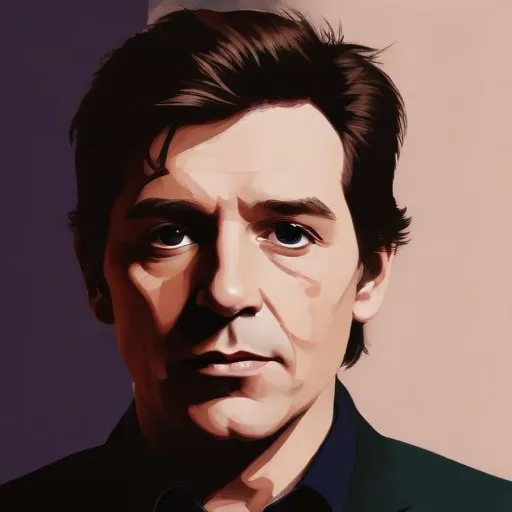
Scottish-Australian singer-songwriter and founding member of the rock band Masters Apprentices, known for his powerful voice and hit songs like "Turn Up Your Radio" and "Because I Love You".
Jim Keays, the Scottish-born Australian musician, is best known as the lead singer, songwriter, and guitarist of the iconic rock band The Masters Apprentices. With his distinctive voice and charismatic stage presence, Keays spearheaded the band's rise to fame in the 1960s and 1970s, churning out hits like "Undecided," "Living in a Child's Dream," and "Because I Love You."
Born on September 9, 1946, in Glasgow, Scotland, Keays was adopted by a childless couple, James and Jessie Keays, at just six months old. The family migrated to Australia in 1951, settling in Adelaide, where Keays discovered his passion for music. He attended Burnside Primary School and Norwood High School, where he formed his first band, The Mustangs, with friends.
In 1965, Keays joined The Masters Apprentices, a band that would become synonymous with Australian rock 'n' roll. With his soulful voice and songwriting skills, Keays helped the band achieve chart-topping success, earning them a loyal following and critical acclaim.
In the late 1960s, The Masters Apprentices released a string of hits, including "Undecided," "Living in a Child's Dream," and "510 Man." Keays' songwriting skills and distinctive voice were instrumental in the band's success. During this period, Keays also worked as a music journalist, writing for the Australian music newspaper Go-Set as its Adelaide correspondent.
In the early 1970s, Keays moved to London, where he continued to write for Go-Set, covering the UK music scene. This exposure allowed him to network with influential musicians and industry professionals, further cementing his reputation as a respected musician and journalist.
After The Masters Apprentices disbanded in 1972, Keays pursued a solo career, releasing five albums between 1974 and 2012. His solo work showcased his growth as a songwriter and musician, exploring new styles and themes.
In 1999, Keays published his memoir, "His Master's Voice: The Masters Apprentices, The Bad Boys of Sixties Rock 'n' Roll," offering a candid and humorous account of his time with the band. The book received critical acclaim and helped solidify Keays' place in Australian music history.
In 1998, The Masters Apprentices were inducted into the ARIA Hall of Fame, recognizing their significant contribution to Australian music. Keays continued to perform and record music until his passing in 2014, leaving behind a legacy as one of Australia's most beloved and respected musicians.
In 2007, Keays was diagnosed with multiple myeloma, a blood cancer that affected his kidneys. After undergoing chemotherapy and stem cell transplants, the cancer went into remission. However, Keays passed away on June 13, 2014, at the age of 67, due to complications from pneumonia.
Jim Keays' remarkable career and enduring legacy continue to inspire new generations of Australian musicians and fans alike.
91 Years Old
Australian rock and roll pioneer who wrote and performed hits like "Wild One" and "Shout!", known as the "King of Australian Rock 'n' Roll".
79 Years Old
Australian rock and roll pioneer of the 1960s, known for his powerful voice and hit songs like "Que Sera Sera" and "It Ain't Necessarily So".
89 Years Old
Australian rock 'n' roll pioneer and TV personality, known for hits like "Oh Yeah!" and "Stuck on You", with a career spanning over 60 years.
Born in 1925
Pioneering rock and roll singer-songwriter credited with helping to define the genre with his 1949 hit "Good Rockin' Tonight", influencing many famous musicians.
91 Years Old
A folk-rock pioneer, known for his protest songs and iconic hit "Eve of Destruction," which became an anthem for the 1960s counterculture movement.
