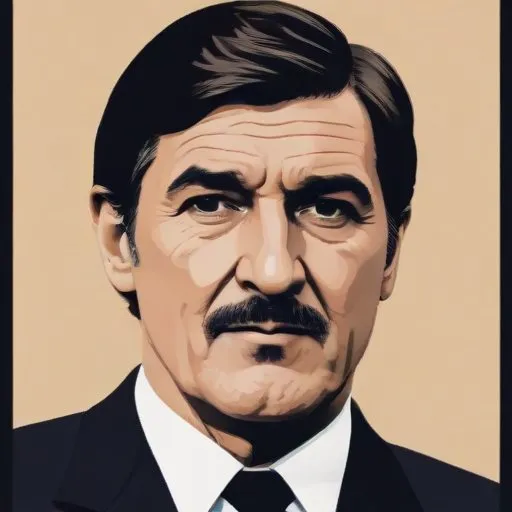
JIMMY HILL: THE FACE OF ENGLISH FOOTBALL
A Multifaceted Career in Football
Jimmy Hill was a household name in English football, revered for his incredible versatility in the sport. From being a talented player to a charismatic television personality, Hill's career spanned almost every role in the sport, cementing his status as a legendary figure in the football fraternity.
Early Life and Playing Career
Born on July 22, 1928, in Balham, London, Hill was the son of William
Thomas Hill, a World War I veteran, and Alice Beatrice Hill (née Wyatt). He was educated at Henry Thornton Grammar School, Clapham, where he developed a passion for football. During his national service, Hill played three trial games for Folkestone Town before suffering a serious cartilage injury that almost ended his footballing dreams. However, he was recommended to Reading, where he joined as an amateur, playing mainly for their third team.
Breakthrough and Success
In 1949, Hill joined Brentford, making 87 appearances before moving to Fulham in March 1952, where he played nearly 300 games, scoring 52 goals. He set a club record by scoring five goals for Fulham in an away match against Doncaster Rovers in 1958. As chairman of the Professional Footballers Association, Hill successfully campaigned for the abolition of the Football League's maximum wage in 1961, revolutionizing the sport.
Television Personality and Broadcasting Career
After retiring as a player, Hill took over as manager of Coventry City, modernizing the team's image and guiding them from the Third Division to the First. In 1967, he began a career in football broadcasting, and from 1973 to 1988, he was the host of the BBC's Match of the Day, becoming a familiar face on British television.
Awards and Legacy
Hill was appointed an Officer of the Order of the British Empire (OBE) in 1994 for his services to football. He was inducted into the English Football Hall of Fame in 2007, recognizing his outstanding contribution to the sport.
Philosophical Contributions and Beliefs
Hill was known for his strong personality and outspoken views on the sport. He advocated for players' rights and was a pioneer in the fight against the maximum wage in football. His leadership and vision helped shape the modern game, and his legacy continues to inspire generations of footballers and fans alike.
Personal Milestones and Key Life Events
- 1949: Joined Brentford, making 87 appearances
- 1952: Moved to Fulham, playing nearly 300 games and scoring 52 goals
- 1961: Successfully campaigned for the abolition of the Football League's maximum wage
- 1967: Began a career in football broadcasting
- 1973-1988: Host of the BBC's Match of the Day
- 1994: Appointed an Officer of the Order of the British Empire (OBE)
- 2007: Inducted into the English Football Hall of Fame
Impact on Modern Society
Jimmy Hill's contributions to football extend beyond his on-field accomplishments. He played a significant role in shaping the modern game, advocating for players' rights, and revolutionizing the sport through his broadcasting career. His legacy continues to inspire and influence generations of footballers, coaches, and fans worldwide.
FAQ
What was Jimmy Hills early life like?
Jimmy Hill was born on July 22, 1928, in Hilborough, Norfolk, England. He developed an interest in football at a young age and played for his school team. After World War II, Hill joined the British Army and continued to play football during his service.
What are Jimmy Hills notable achievements as a footballer?
Jimmy Hill had a successful football career, playing for teams like Brentford, Fulham, and Nottingham Forest. He made 297 appearances and scored 101 goals. Hill was also a member of the England national team, earning nine caps and scoring five goals.
How did Jimmy Hill transition into sports broadcasting?
After retiring from football, Jimmy Hill transitioned into sports broadcasting. He worked as a commentator and pundit for the BBC, ITV, and Sky Sports, becoming a household name in British football.
What was Jimmy Hills role in the 1961 players strike?
Jimmy Hill was a key figure in the 1961 players strike, which led to the abolition of the maximum wage in English football. He was the chairman of the Professional Footballers Association and played a crucial role in the negotiations.
What were Jimmy Hills later years like?
After retiring from broadcasting, Jimmy Hill lived a quiet life in London. He passed away on December 19, 2015, at the age of 87, leaving behind a legacy as a football legend and broadcasting icon.