


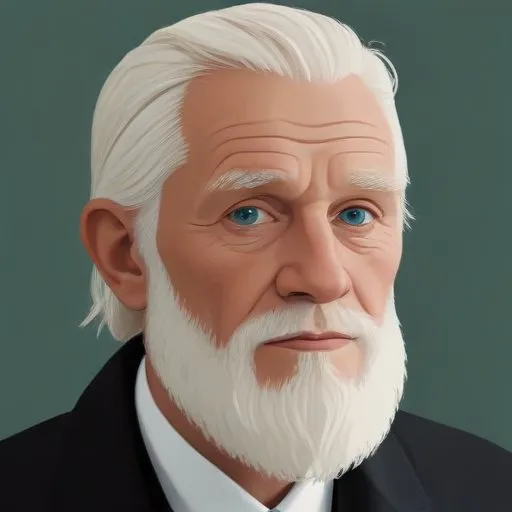
A 19th-century Icelandic Renaissance man, he was a prolific writer, poet, and naturalist who contributed significantly to the country's literary and scientific heritage. His works often explored the intersection of nature and human experience.
Jñas Hallgrímsson, born on November 16, 1807, is one of Iceland's most beloved poets, renowned for his captivating verses that evoke the essence of Icelandic culture and landscape. As a founder of the influential Icelandic journal Fjölnir, Jñas played a pivotal role in promoting Icelandic nationalism, ultimately contributing to the country's independence movement.
Jñas was born in the picturesque valley of Önundarland, in the north of Iceland, to Hallgrímur Örsteinsson, a curate, and Rannveig Jónasdóttir. Following his father's untimely death in 1816, Jñas was sent to live with his aunt, only to return to his family's home in Önundarland for his confirmation in 1821. He then attended school in Skagafjörður, where he was instructed by the Reverend Einar H. Thorlacius, and later won a scholarship to attend the prestigious school at Bessastaðir.
After passing his final examinations in 1829, Jñas moved to Reykjavík and worked as a clerk for a sheriff, while also practicing as a defense lawyer. During this period, he began to cultivate his passion for literature, which would eventually become his life's work. In 1832, Jñas sailed to Denmark, where he enrolled at the University of Copenhagen, initially pursuing a law degree before switching to literature and natural sciences. It was during his time in Copenhagen that Jñas' literary talents began to flourish, and he became an integral part of the Fjölnismenn movement.
In 1835, Jñas co-founded the influential journal Fjölnir, alongside his fellow Fjölnismenn, including Konráð Gíslason and Tómas Sæmundsson. The journal served as a platform for promoting Icelandic nationalism, with Jñas using his poetry and articles to inspire a sense of national pride and unity among the Icelandic people. Through Fjölnir, Jñas and his contemporaries aimed to stimulate the Icelandic independence movement, paving the way for the country's eventual sovereignty.
Jñas' poetic works are characterized by their vivid descriptions of Icelandic landscapes, folklore, and mythology. His poetry is infused with a deep sense of national pride and a longing for Iceland's independence. Today, Jñas is celebrated as one of Iceland's most cherished poets, and his birthday, November 16, is commemorated as the Day of the Icelandic Language. The Jñas Hallgrímsson Award is bestowed upon individuals who have made outstanding contributions to the Icelandic language.
Jñas' personal life was marked by tragedy, including the loss of his father at a young age and a rejected proposal to Christiane Knudsen in 1831. Despite these setbacks, Jñas remained dedicated to his literary pursuits, which ultimately brought him solace and recognition.
Jñas Hallgrímsson's contributions to Icelandic literature and nationalism have had a profound impact on Icelandic society. His poetry and writings continue to inspire Icelandic people, and his legacy serves as a testament to the power of literature in shaping national identity.
In conclusion, Jñas Hallgrímsson's life and works are a testament to the transformative power of literature and the importance of preserving national heritage. As Iceland continues to celebrate his legacy, Jñas' poetry and ideals remain an integral part of the country's cultural fabric.
Born in 1902
A Nobel Prize-winning Icelandic author and poet, renowned for his vivid storytelling and poetic prose, which explores the human condition, Icelandic culture, and the struggle between tradition and modernity.
