


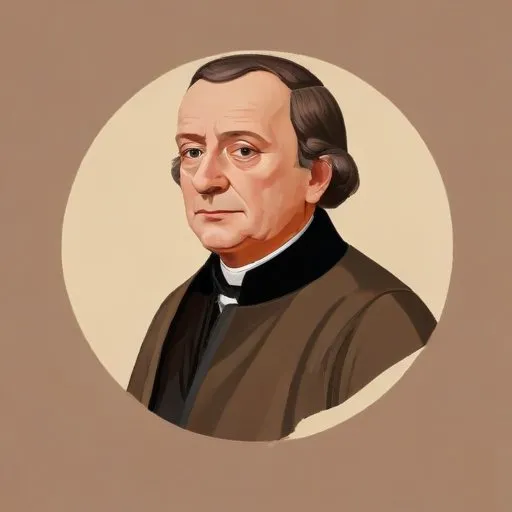
A prominent 18th-century German academic and jurist who made significant contributions to the development of jurisprudence, particularly in the fields of Roman law and natural law.
Johann Gottlieb Heineccius was a renowned German jurist who left an indelible mark on the field of legal philosophy. He is best known for his groundbreaking work in treating law as a rational science, rather than an empirical art, and developing a systematic approach to jurisprudence.
Heineccius was born on September 11, 1681, in Eisenberg, Thuringia, Germany. He studied theology at the University of Leipzig and later pursued law at the University of Halle, where he was appointed as a professor of philosophy in 1713 and jurisprudence in 1718.
Heineccius's most notable contributions include:
These works demonstrate Heineccius's commitment to developing a systematic and philosophical approach to law, which earned him a place among the leading jurists of his time.
Heineccius belonged to the school of philosophical jurists, who sought to establish law as a rational science. He believed that law should be based on first principles, rather than mere expediency. This philosophical approach enabled him to develop a coherent and systematic understanding of law, which has had a lasting impact on legal theory.
Heineccius's work has had a significant influence on the development of modern legal systems. His emphasis on the importance of philosophical foundations in law has shaped the way lawyers and jurists approach legal problems. Furthermore, his treatises on Roman law and international law have contributed to the development of modern legal codes and international treaties.
In addition to his academic achievements, Heineccius held various prestigious positions, including professorships at the universities of Franeker and Frankfurt. He eventually returned to the University of Halle, where he served as a professor of philosophy and jurisprudence until his death on August 31, 1741.
Heineccius's legacy is a testament to the power of philosophical inquiry in shaping our understanding of law. His work continues to influence legal scholarship and inform legal practice to this day. His son, Johann Christian Gottlieb Heineccius, edited his father's Opera omnia, a nine-volume collection of his works, which was published in 1771.
As a pioneer in the field of legal philosophy, Heineccius's contributions have left an enduring mark on the development of modern law. His commitment to philosophical rigor and systematic thinking has inspired generations of lawyers, jurists, and scholars, cementing his place as one of the most important legal thinkers of the 18th century.
Born in 1724
Developed influential philosophical frameworks, such as the Critique of Pure Reason, that shaped modern Western thought on ethics, morality, and human understanding.
Born in 1679
Developed a philosophical system that combined elements of Leibniz and Descartes, and was a prominent figure in the German Enlightenment. He wrote extensively on metaphysics, ethics, and logic.
