


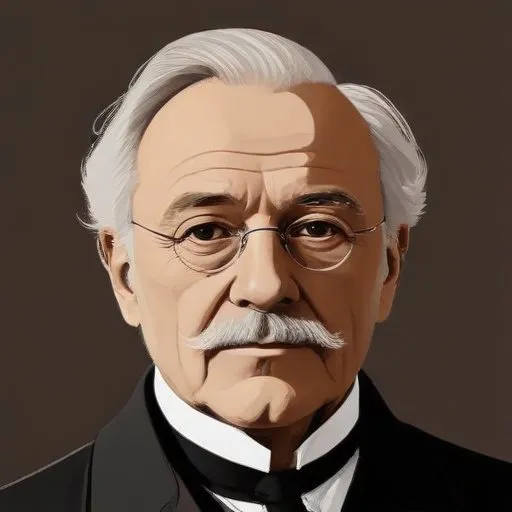
A German Romantic-era composer and conductor, known for his contributions to the development of the Lied genre and his influence on Franz Schubert's work.
Johann Rudolf Zumsteeg is renowned for championing the operas of Mozart in Stuttgart, staging the first performances of Die Zauberflöte, Don Giovanni, and Così fan tutte. Additionally, he was a prolific composer of Lieder and ballads, with his works having a profound influence on the young Franz Schubert.
Zumsteeg was born on January 10, 1760, in Sachsenflur, Lauda-Königshofen, in a military camp to his father Rudolph Zum Steeg. After the death of both parents, he received an education at the Karlsschule Stuttgart.
Initially admitted as a stucco worker, Zumsteeg's musical aptitude soon allowed him to transfer to the music department, where he became intimate friends with Friedrich Schiller. A setting for Schiller's drama, Die Räuber (1782), is an example of the close collaboration that Zumsteeg undertook with prominent poets.
Zumsteeg showed promise as a virtuoso cellist, claiming the highest award in the performance division of the Karlsschule for the sixth time in 1778. He later studied cello with Eberhard Malterre and Agostino Poli, who also instructed him in composition.
His early compositional works were primarily for cello, but he held them in low regard later in life. Instead, he focused on composing Lieder and ballads, which would become his most notable contributions to the world of music.
Zumsteeg's seven-volume composition, Kleine Lieder und Balladen, was published by Breitkopf & Härtel between 1800 and 1805. The volumes were highly popular in Germany, remaining well-known until the 1830s.
According to Schubert's friend, Joseph von Spaun, Schubert discovered Zumsteeg's songs while at seminary, and they moved him profoundly. Zumsteeg's influence on Schubert's early work is undeniable, with Schubert even imitating some of Zumsteeg's ballads in his own compositions.
Zumsteeg's contributions to the world of music extend beyond his own compositions. He played a crucial role in popularizing Mozart's operas in Stuttgart, ensuring their continued relevance and popularity.
His own compositions, particularly his Lieder and ballads, have had a lasting impact on the development of German music, influencing future generations of composers, including the likes of Schubert.
Zumsteeg's life may have been cut short, but his legacy continues to resonate in the world of music, inspiring future generations of composers and musicians alike.
