


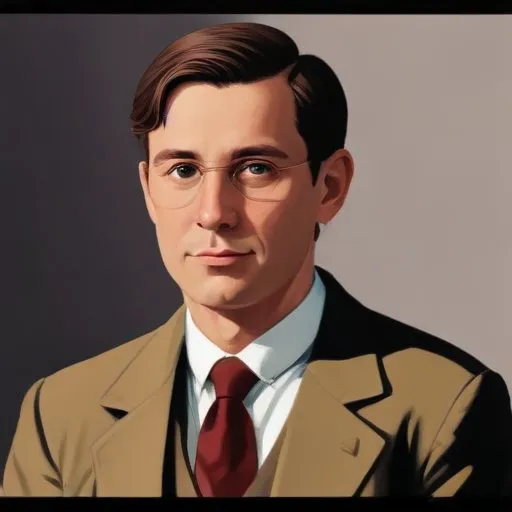
Renowned for his groundbreaking research on the evolution of vertebrates and his influential textbook "Invertebrate Zoology", he made significant contributions to the field of zoology.
John Alexander Moore, a renowned American zoology professor, is best recognized for his groundbreaking work on frog speciation, which has significantly contributed to the field of zoology. His meticulous research and discoveries have shed new light on the intricacies of species formation, earning him a prominent place in the annals of scientific history.
Born on June 27, 1915, in Charles Town, West Virginia, Moore's early life was marked by frequent relocations following his parents' divorce. Despite the uncertainty, Moore's upbringing in the Blue Ridge Mountains instilled in him a deep fascination with birds, which would later evolve into a broader interest in zoology.
Moore's academic prowess became apparent at a young age, as he published his first academic article in The Auk at just 15 years old. His talent and dedication earned him a place at Columbia College, where he studied under the guidance of esteemed embryology professor Lester Barth. It was during this period that Moore met his future wife, Betty Clark, a fellow graduate student.
Moore's academic career spanned several institutions, including Brooklyn College, Queens College, and Barnard College, where he taught zoology and eventually became a full professor in 1950. His most notable achievement, however, was the publication of his monograph on frog speciation in 1961, which described an astonishing 94 frog species. This seminal work was the result of a Fulbright Scholarship-funded research trip to Australia with his wife, where they employed cross-fertilization techniques to study frog evolution.
Moore's work was characterized by his meticulous attention to detail and a profound understanding of the intricacies of species formation. His research served as a testament to the importance of interdisciplinary approaches, combining embryology, genetics, and zoology to gain a deeper understanding of the natural world.
Moore's groundbreaking research has had a profound impact on our understanding of species formation and evolution. His work has inspired generations of zoologists, embryologists, and geneticists, paving the way for further research into the complexities of life on Earth. As a testament to his enduring legacy, Moore's research continues to influence our understanding of the natural world, ensuring that his contributions will be felt for generations to come.
Moore's impressive body of work was recognized with a Fulbright Scholarship in 1952, a testament to his exceptional contributions to the field of zoology.
Born in 1900
A pioneer in evolutionary biology, he integrated genetics and evolution, revolutionizing our understanding of species adaptation and diversity. His work laid the foundation for modern evolutionary theory.
Born in 1904
A renowned biologist and ornithologist who pioneered the modern synthesis of evolutionary biology, shaping our understanding of species and their diversity.
Born in 1902
A renowned paleontologist and author who revolutionized the field of evolutionary biology with his groundbreaking work on fossil records and species adaptation. His contributions significantly shaped modern understanding of life on Earth.
Born in 1895
A prominent literary critic and editor who shaped American literary culture with his insightful essays and reviews, influencing generations of writers and intellectuals.
Born in 1890
A pioneering geneticist who discovered the effects of X-ray radiation on genetic mutation, leading to a deeper understanding of evolution and heredity.
Born in 1889
Developed the modern concept of genetic drift, a fundamental principle in population genetics, and pioneered the use of statistical methods in evolutionary biology.
Born in 1890
A pioneer in statistics and genetics, he developed techniques for data analysis and laid the foundations for modern evolutionary theory. His work has far-reaching implications in fields like medicine, agriculture, and social sciences.
Born in 1887
A pioneering biologist and conservationist who played a key role in establishing UNESCO and promoting the concept of evolution, making significant contributions to the fields of biology and anthropology.
