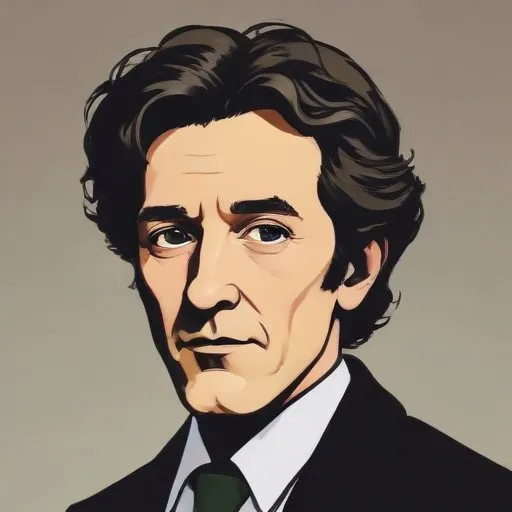
John Boyle O'Reilly: The Irish Poet and Activist Who Defied British Rule
A Life of Rebellion and Literary Brilliance
John Boyle O'Reilly was a celebrated Irish poet, journalist, author, and activist who left an indelible mark on the struggle for Irish independence and the world of literature. Through his editorship of the Boston newspaper
The Pilot, his prolific writing, and lecture tours, O'Reilly became a prominent spokesperson for the Irish community and culture.
Early Life and Radicalization
Born on June 28, 1844, at Dowth Castle, O'Reilly's early life was marked by a sense of discontent with British rule in Ireland. After moving to his aunt's residence in England as a teenager, O'Reilly became involved in journalism, eventually enlisting in the British Army. However, his experience in the army only strengthened his resolve against British rule, leading him to join the Irish Republican Brotherhood (IRB) under an assumed name in 1864.
The Fenian Rebellion and Penal Servitude
O'Reilly's involvement with the IRB led to his arrest in 1866, along with many others, and subsequent trial, where he was sentenced to death. The sentence was later commuted to 20 years of penal servitude, and in 1867, O'Reilly was transported to Western Australia. During his imprisonment, O'Reilly continued to write, producing works that would later be published.
Escape and Rediscovery
In 1869, O'Reilly escaped from Western Australia with the assistance of Fr.
Patrick McCabe, a Catholic priest from County Cavan. He made his way to Boston, where he began a new life as a writer and journalist. O'Reilly's escape and subsequent literary success were a testament to his unyielding spirit and determination.
Literary Contributions
O'Reilly's writing career spanned multiple genres, including poetry, fiction, and non-fiction. His notable works include
Moondyne (1879),
Songs from the Southern Seas (1873), and poems such as "The Cry of the Dreamer," "The White Rose," and "In Bohemia." These works showcased O'Reilly's mastery of language and his ability to capture the essence of the human experience.
Personal Life and Legacy
In 1872, O'Reilly married Mary Murphy, with whom he had four daughters. Despite his literary success, O'Reilly's later years were marked by poor health, which ultimately led to his death on August 10, 1890. His memorial service at Tremont Temple was a testament to his impact on the Irish-American community.
Impact on Modern Society
O'Reilly's legacy extends far beyond his literary contributions. Through his activism and writing, he helped to galvanize the Irish-American community, raising awareness about the struggle for Irish independence and the need for social justice. Today, O'Reilly's work remains a powerful symbol of resistance against oppression and a testament to the enduring power of the human spirit.
Quotes and Memorable Sayings
- "The dreamer's dream is the seed of the poet's song." - John Boyle O'Reilly
- "The true patriot is not the man who thinks his country is the best, but the man who thinks it can be better." - John Boyle O'Reilly
Historical Context and Legacy
O'Reilly's life and work must be viewed within the context of the Irish independence movement and the struggles of the Irish people under British rule. Through his activism and writing, O'Reilly helped to shape the discourse around Irish identity and the struggle for self-determination. Today, he is remembered as a pioneer in the fight for Irish freedom and a literary giant in his own right.
FAQ
What was John Boyle OReillys career as a poet and journalist?
John Boyle OReilly was an Irish-born poet, journalist, and fiction writer who worked for several newspapers in the United States, including the Boston Pilot, where he wrote about social and political issues.
What is John Boyle OReillys most famous poem?
John Boyle OReillys most famous poem is In Bohemia, which is a romantic and nostalgic tribute to the beauty of Bohemia.
When was John Boyle OReilly born?
John Boyle OReilly was born on June 28, 1844, in Dowth, County Meath, Ireland.
What was John Boyle OReillys role in the Fenian movement?
John Boyle OReilly was a member of the Fenian movement, a militant Irish nationalist organization, and was involved in the planning of the Fenian Rising of 1867.
What is John Boyle OReillys legacy in American literature?
John Boyle OReilly is considered an important figure in American literature, known for his poetry and fiction, which explored themes of identity, social justice, and Irish-American experience.