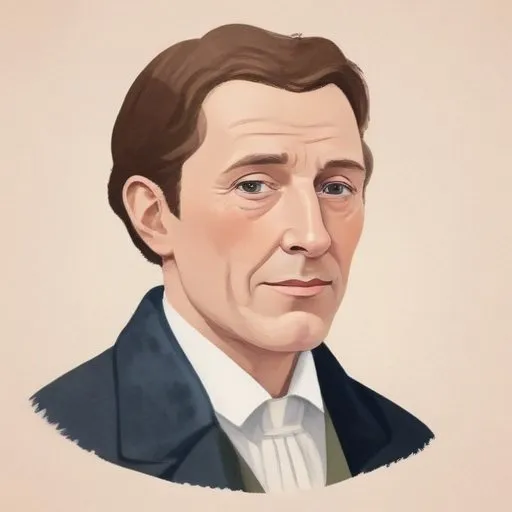
John Byrom

John Byrom

John Byrom was born on February 29th, 1692

Full Name: John Byrom
Birthplace: Manchester, England
Nationality: English
Profession: Poet, educator
Education: Trinity College, Cambridge
Innovations: Shorthand system
Death: 1763
Burial: Poets Corner

A poet and educator who wrote lyrics for hymns, including "Christians, Awake! Salute the Happy Morn", and developed a system of shorthand writing. His poetry and teachings promoted Christian values and morality.

Written by: David Williams David Williams

John Byrom: The Shorthand Revolutionary and Poetic Soul

John Byrom, a luminary of the 18th century, is famously known for his groundbreaking invention of a shorthand system that would change the way people communicate. He is also celebrated as a poet, leaving an indelible mark on the world of literature with his iconic hymn, "Christians, Awake! Salute the Happy Morn."

Early Life and Education

Byrom was born on February 29, 1692, in Manchester, England, to a family of gentlefolk. His ancestors, including his great-grandfather Ralph Byrom, had established themselves as prosperous wool merchants. Byrom's privileged upbringing afforded him an excellent education at The King's School in Chester and Merchant Taylors' School in London. He later attended Trinity College, Cambridge, where he became a fellow in 1714.

The Shorthand System

After studying medicine at Montpellier in France, Byrom returned to England in 1716 and perfected his shorthand system. This innovative invention enabled individuals to rapidly transcribe spoken language, revolutionizing the way people recorded and communicated information. Byrom's shorthand system quickly gained popularity, earning him recognition as a pioneer in the field.

Poetic Contributions

Byrom's poetic talents are showcased in his most famous work, the hymn "Christians, Awake! Salute the Happy Morn." This iconic hymn, supposedly written as a Christmas gift for his daughter, has become a beloved and enduring part of Anglican tradition. His poetic voice adds a layer of spirituality and depth to his otherwise practical and inventive nature.

Landowner and Philanthropist

As a significant landowner, Byrom's wealth and influence extended beyond his intellectual pursuits. He used his resources to support and engage with his community, leaving a lasting legacy in Manchester and beyond.

Personal Milestones and Key Life Events

A Lasting Legacy

John Byrom's groundbreaking shorthand system and poetic accomplishments have cemented his place in history as a true innovator and creative force. His contributions continue to inspire and influence generations, a testament to the power of human ingenuity and artistic expression.

Timeline
1692
Born in England
John Byrom was born on February 29, 1692, in Manchester, England.
1712
Graduated from Cambridge
Byrom graduated from Trinity College, Cambridge, with a degree in divinity.
1719
Published Private Thoughts
Byrom published his book Private Thoughts on Religion, a collection of devotional writings.
1757
Died
Byrom died on September 26, 1757, at the age of 65.
John Byrom

John Byrom Quiz

What was John Byrom's profession?

Score: 0/5
FAQ
What was John Byroms contribution to literature?
John Byrom was a prominent English poet and educator, writing influential works on language, literature, and philosophy, and promoting the study of classical languages and literature.
What was John Byroms role in the development of shorthand?
John Byrom developed a new system of shorthand writing, which became widely used and influential in the development of stenography and modern shorthand systems.
What were John Byroms views on education?
John Byrom was a strong advocate for education, promoting the importance of classical learning, and establishing a school in Manchester to provide education to disadvantaged children.
What was John Byroms impact on Manchester?
John Byrom played a significant role in promoting the cultural and intellectual development of Manchester, establishing the Manchester Literary and Philosophical Society, and supporting the development of the citys educational and cultural institutions.
What was John Byroms relationship with the Jacobite movement?
John Byrom was a sympathizer with the Jacobite movement, supporting the restoration of the Stuart dynasty, and writing poetry and pamphlets in support of the cause.