


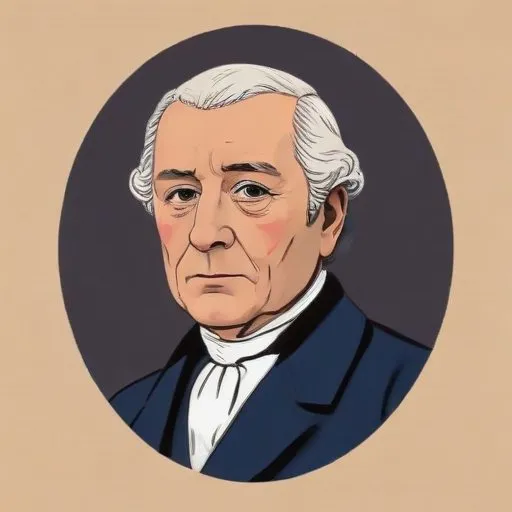
A prominent 18th-century politician who served as Lord President of the Council, playing a significant role in British politics and governance. He's known for his influential decisions and leadership during a tumultuous period in British history.
John Carteret, 2nd Earl Granville, is renowned for his illustrious career as a British statesman, serving as Lord President of the Council from 1751 to 1763, and working closely with Prime Minister Spencer Compton, Earl of Wilmington, to navigate the complexities of government. His astute diplomatic skills and mastery of multiple languages, including German, earned him the trust of King George I and solidified his position as a respected figure in British politics.
Carteret was born on April 22, 1690, to George Carteret, 1st Baron Carteret, and Lady Grace Granville, suo jure 1st Countess Granville. He received his education at Westminster School and Christ Church, Oxford, where he demonstrated a keen interest in the classics, philosophy, and modern languages. The celebrated writer Jonathan Swift noted that Carteret's proficiency in Greek, Latin, and philosophy was extraordinary for a person of his rank.
Carteret's marriage to Lady Frances Worsley on October 17, 1710, at Longleat House, marked the beginning of his ascension to prominence. His wife was the granddaughter of the first Viscount Weymouth, and their union strengthened Carteret's connections to the British aristocracy. In 1715, he became Seigneur of Sark and Bailiff of Jersey, holding the latter position until 1763. Although he sold the fief of Sark in 1720, Carteret's reputation as a shrewd politician and administrator continued to grow.
As Lord President of the Council, Carteret played a pivotal role in maintaining harmony among the various factions of government. He worked tirelessly with Prime Minister Wilmington to ensure the stability of the British administration. Carteret's legacy extends beyond his political achievements, as he was also a patron of the arts and a supporter of literary figures, including Walter Harte, author of the Life of Gustavus Adolphus.
Carteret's love for the classics and philosophy is well-documented. His early education and literary pursuits instilled in him a deep appreciation for the works of ancient Greeks and Romans. Although his philosophical beliefs are not explicitly stated, Carteret's actions and decisions as a statesman demonstrate a commitment to prudence, diplomacy, and the stewardship of British interests.
John Carteret, 2nd Earl Granville, lived during a tumultuous period in British history, marked by the reigns of King George I and King George II. His role as Lord President of the Council and his collaborative efforts with Prime Minister Wilmington helped maintain stability and ensured the continuity of government. Carteret's legacy serves as a testament to the enduring power of diplomacy, statesmanship, and the cultivation of knowledge.
In conclusion, John Carteret, 2nd Earl Granville, was a multifaceted individual whose contributions to British politics, literature, and the arts continue to inspire generations. His remarkable life, marked by dedication, diplomacy, and a passion for learning, serves as a shining example of excellence in statesmanship.
Born in 1676
The first Prime Minister of the United Kingdom, serving from 1721 to 1742, known for establishing the office of Prime Minister and setting important precedents for the role. He is also recognized for his skill in managing Parliament and his role in shaping British politics.
Born in 1694
The Prime Minister who led Britain through a period of relative peace and stability, and is often credited with being the first Prime Minister in the modern sense, holding office from 1743 to 1754.
Born in 1712
A skilled lawyer and politician who served as Prime Minister of Great Britain, known for implementing the Stamp Act, a taxation policy that sparked American colonial resistance.
