


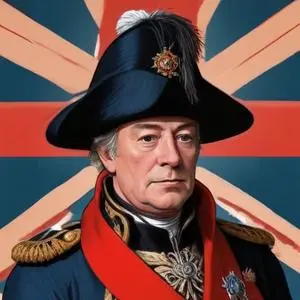
A renowned military strategist and politician who led British forces to numerous victories in the War of the Spanish Succession, earning him great acclaim and prestige. He was also a trusted advisor to Queen Anne.
John Churchill, 1st Duke of Marlborough, is renowned for being one of Europe's greatest generals, with an unblemished record of never having lost a battle. His illustrious career spanned over three decades, showcasing his exceptional military prowess, diplomatic acumen, and strategic brilliance.
Churchill's ascent to fame began in the 1670s, when he served as a page at the court of the House of Stuart under James, Duke of York. His courage, military skill, and diplomatic finesse earned him recognition and rapid promotion. He played a crucial role in defeating the Monmouth Rebellion in 1685, securing James' position on the throne.
However, Churchill's loyalty was soon tested when he became a key player in the military conspiracy that led to James' deposition during the Glorious Revolution. Although he was rewarded with the title Earl of Marlborough by William III, persistent charges of Jacobitism led to his fall from office and temporary imprisonment in the Tower of London.
William III recognized Churchill's exceptional abilities and appointed him as his deputy in Southern Netherlands (modern-day Belgium) before the War of the Spanish Succession in 1701. However, it was not until the accession of Queen Anne in 1702 that Churchill's fortunes truly soared. His marriage to Sarah Jennings and her close relationship with Anne ensured his rapid rise, first to the captain-generalcy of British forces and eventually to a dukedom.
As the de facto leader of Allied forces in the Low Countries, Churchill's victories at the battles of Blenheim (1704), Ramillies (1706), Oudenarde (1708), and Malplaquet (1709) cemented his place in history as one of Europe's greatest generals. His military campaigns not only showcased his tactical genius but also contributed significantly to Britain's emergence as a major European power.
Churchill's marriage to Sarah Jennings was marked by mutual respect, admiration, and a deep understanding of each other's strengths and weaknesses. Their partnership played a crucial role in shaping his career, with Sarah often serving as his confidante and advisor. The couple's relationship was also marked by periods of estrangement, particularly during the tumultuous years following Queen Anne's accession.
John Churchill, 1st Duke of Marlborough, left an indelible mark on modern society. His military campaigns and strategic genius continue to inspire and inform military leaders around the world. His legacy extends beyond the realm of warfare, influencing British politics, society, and culture for generations to come.
Churchill's life and career spanned a tumultuous period in European history, marked by the Glorious Revolution, the War of the Spanish Succession, and the rise of Britain as a major power. His achievements, both on and off the battlefield, continue to shape our understanding of this pivotal era. As a testament to his enduring legacy, the Duke of Marlborough remains one of the most revered and studied figures in British history.
Born in 1653
The husband of Queen Anne of Great Britain, he played a crucial role in the Glorious Revolution and was a key figure in the royal court, known for his loyalty and military prowess.
Born in 1636
The Archbishop of Canterbury from 1694 to 1715, known for his strong stance against Catholicism and his role in the Glorious Revolution. He was a prominent figure in the Church of England during a time of great change.
