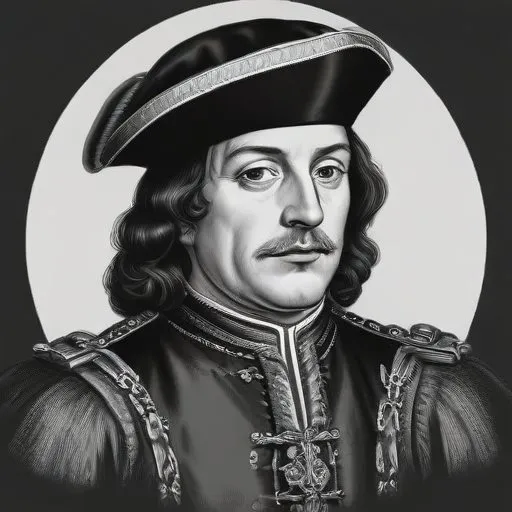
John II, Duke of Schleswig-Holstein-Sonderburg: A Life of Nobility and Statesmanship
A Life of Distinction and Influential Leadership
John II, Duke of Schleswig-Holstein-Sonderburg, is renowned for his remarkable life of nobility, statesmanship, and diplomacy, which spanned over seven decades. As the fourth child and third son of King
Christian III of Denmark and Norway, John II played a significant role in shaping the political landscape of 16th-century Europe.
Early Life and Education
Born on March 25, 1545, in Haderslev, Duchy of Schleswig, John II was groomed for a life of leadership and governance. His education and upbringing were heavily influenced by his royal upbringing, which equipped him with the necessary skills and knowledge to navigate the complexities of statecraft.
Rise to Prominence
Upon the death of his father, King Christian III, in 1559, John II's eldest brother, Frederick II, inherited the thrones of Denmark and Norway. However, John II and his middle brother, Magnus, were also entitled to their father's share of the duchies of Schleswig and Holstein. To avoid divisions, attempts were made to secure suitable positions for the younger brothers elsewhere. Although plans to secure John II the post of prince-archbishop of Bremen failed, he was eventually allotted a portion of the duchies with Sonderburg (now Danish Snderborg) as his ducal seat.
Statesmanship and Diplomacy
John II played an active role in the Danish government, often supporting his sister-in-law, the Queen, during the minority of his nephew,
Christian IV of Denmark. He demonstrated his diplomatic prowess by navigating the intricate web of alliances and rivalries that characterized 16th-century European politics.
Personal Life and Marriages
John II married twice, first to Elisabeth of Brunswick-Grubenhagen on August 19, 1568, in Kolding. He later married his second wife, a young woman, in a union that would ultimately end in tragedy.
Legacy and Impact
John II's life was marked by his commitment to statesmanship, diplomacy, and nobility. His influence extended beyond the borders of Schleswig-Holstein-Sonderburg, shaping the trajectory of European politics and governance. His legacy serves as a testament to the enduring power of effective leadership and diplomacy.
Philosophical Contributions and Beliefs
Throughout his life, John II demonstrated a deep understanding of the complexities of human nature and the importance of collaboration in achieving common goals. His philosophical leanings were shaped by his experiences as a statesman and diplomat, informing his approach to governance and leadership.
Historical Context and Legacy
John II's life and legacy must be understood within the context of 16th-century European politics and the complexities of the Danish royal family. His impact on modern society can be seen in the enduring importance of diplomacy, statesmanship, and effective leadership.
Personal Milestones and Key Life Events
- Born on March 25, 1545, in Haderslev, Duchy of Schleswig
- Married Elisabeth of Brunswick-Grubenhagen on August 19, 1568, in Kolding
- Played an active role in the Danish government during the minority of Christian IV of Denmark
- Died on October 9, 1622, in Glücksburg
Influence on Modern Society
John II's life and legacy continue to inspire and inform modern approaches to governance, diplomacy, and leadership. His commitment to statesmanship and collaboration serves as a powerful reminder of the importance of effective leadership in shaping the course of human history.
FAQ
Who was John II, Duke of Schleswig-Holstein-Sonderburg?
John II, Duke of Schleswig-Holstein-Sonderburg was a German nobleman who lived in the 16th and 17th centuries. He was a member of the House of Oldenburg and ruled Schleswig-Holstein-Sonderburg from 1564 to 1622.
What was John II, Duke of Schleswig-Holstein-Sonderburgs family background?
John II, Duke of Schleswig-Holstein-Sonderburg was the son of Frederick II, Duke of Schleswig-Holstein and Gertrude of Denmark. He was part of a powerful noble family that dominated northern Germany.
What were John II, Duke of Schleswig-Holstein-Sonderburgs policies towards the Protestant Reformation?
John II, Duke of Schleswig-Holstein-Sonderburg was a supporter of the Protestant Reformation, introducing Lutheranism in his territories and supporting the Protestant cause during the Thirty Years War.
What were John II, Duke of Schleswig-Holstein-Sonderburgs military achievements?
John II, Duke of Schleswig-Holstein-Sonderburg was a skilled military leader, participating in several campaigns against Denmark and the Holy Roman Empire during the War of the succesion to the Bishopric of Verden.
How did John II, Duke of Schleswig-Holstein-Sonderburgs reign impact Schleswig-Holstein-Sonderburg?
John II, Duke of Schleswig-Holstein-Sonderburgs reign had a significant impact on Schleswig-Holstein-Sonderburg, promoting economic growth, cultural development, and political stability.