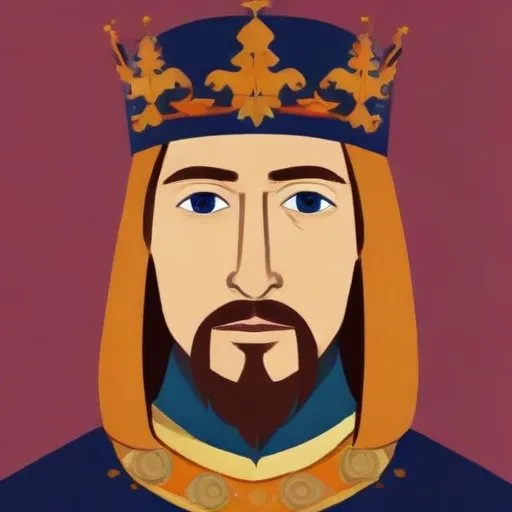
John I of Castile: The King of Castile and Len
A King of Tolerance and Grand Ambitions
John I of Castile, also known as Juan I, was the King of Castile and Len from 1379 until 1390. He is remembered for his tolerant policies towards Jews, his grand ambitions, and his complex relationships with neighboring kingdoms.
Early Life and Accession
Born on August 24, 1358, John I was the son of Henry II of Castile and his wife Juana Manuel of Castile. Upon the death of his father in 1379, John I ascended to the throne, marking the beginning of a new era in Castilian history.
The Order of the Pigeon
One of John I's most notable achievements was the formation of the short-lived military order of the Order of the Pigeon in 1379. Although the order's purpose remains unclear, it was known for its extravagant feasts, which featured the organization's namesake, the pigeon, as the main course.
A Tolerant King
Unlike his father, John I displayed a more tolerant attitude towards the Jewish community. He granted legal exemptions to several Jews, including Abraham David Taro, demonstrating a willingness to coexist with the Jewish population.
Military Campaigns and Alliances
In the summer of 1380, John I launched a joint Spanish-French naval campaign against England, resulting in the sack and burning of Gravesend and surrounding towns. He also ransomed Leo V of the House of Lusignan, the last Latin king of the Armenian Kingdom of Cilicia, from the Mamluks and granted him the lifetime lordship of Madrid, Villa Real, and Andújar in 1383.
Portuguese Marriage and Succession Crisis
John I married Beatrice of Portugal, daughter of King Ferdinand I of Portugal, in 1383. Upon the death of his father-in-law, John I endeavored to enforce the claims of his wife to the crown of Portugal, sparking the 1383-1385 Crisis, a period of civil unrest and anarchy in Portugal.
Defeat and Rivalry
The king's ambitions were eventually thwarted by his rival,
John I of Portugal, who resisted John I's claims to the Portuguese throne. The Castilian king suffered a crushing defeat at the Battle of Aljubarrota in 1385.
English Rivalry and Diplomacy
John I also faced opposition from
John of Gaunt, who claimed the crown of Castile by right of his wife Constance, the eldest daughter of
Peter of Castile. The king of Castile eventually bought off the claim of his English competitor by arranging a marriage between his son Henry and Catherine, daughter of Constance and John of Gaunt, as part of the treaty ratified at Bayonne in 1388.
Legacy and Impact
John I's reign was marked by grand ambitions, military campaigns, and a complex web of alliances and rivalries. Despite his defeats, he demonstrated a willingness to coexist with the Jewish community and orchestrated extravagant feasts with the Order of the Pigeon. His legacy serves as a testament to the intricate politics and diplomacy of 14th-century Europe.
FAQ
Who was John I of Castile?
John I of Castile was the King of Castile and León from 1379 to 1390 and a member of the House of Trastámara.
What were John Is achievements?
John I of Castile strengthened the Castilian monarchy, centralized power, and secured key alliances, including the Treaty of Bayonne with England.
What was John Is relationship with Portugal?
John I of Castile had a complex relationship with Portugal, involving conflicts and alliances, ultimately securing a advantageous marriage alliance with the Portuguese royal family.
What is John Is significance in Castilian history?
John I of Castile is significant in Castilian history as a capable ruler who consolidated power, secured key alliances, and strengthened the Castilian monarchy.
Where is John I buried?
John I of Castile is buried in the Cathedral of Toledo in Spain, a symbol of his power and legacy.