


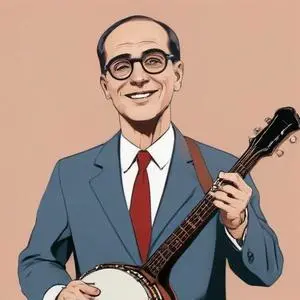
A pioneering musicologist who traveled the American South, collecting and preserving folk songs, blues, and ballads, helping to shape the country's musical heritage.
John Lomax is renowned for his tireless efforts in preserving American folk music, earning him the title of a pioneering musicologist and folklorist. Through his work, he introduced the world to the rich cultural heritage of American folk music, paving the way for future generations to appreciate and enjoy this unique art form.
Born on September 23, 1867, in Goodman, Mississippi, John Lomax grew up in central Texas, where he was exposed to cowboy songs and the musings of former slave and farmhand Nat Blythe. This early friendship had a profound impact on Lomax's life, shaping his appreciation for folk music and his desire to share it with the world.
Lomax's work began in the 1930s, when he started collecting and recording folk songs from rural America. He traveled across the country, meeting musicians, and documenting their songs, stories, and traditions. His work resulted in the publication of several books, including Cowboy Songs and Other Frontier Ballads and American Ballads and Folk Songs, which introduced American folk music to a broader audience.
John Lomax's contributions to the preservation of American folk music are immeasurable. He not only introduced the world to this unique art form but also paved the way for future generations of folk musicians and musicologists. His work has inspired many notable musicians, including Bob Dylan, Pete Seeger, and Joan Baez, who have credited Lomax with shaping their musical styles.
John Lomax's work was recognized with several awards and honors during his lifetime, including a Guggenheim Fellowship and an honorary doctorate from the University of Texas. His legacy continues to be celebrated through various awards and initiatives, including the John A. Lomax Fellowship, which supports research in American folk music.
John Lomax's work has had a profound impact on modern society, inspiring a new appreciation for American folk music and its cultural heritage. His preservation efforts have ensured that this unique art form continues to thrive, influencing generations of musicians, musicologists, and enthusiasts alike.
In conclusion, John Lomax's tireless efforts in preserving American folk music have earned him a place in the annals of history as a pioneering musicologist and folklorist. His legacy continues to inspire and educate, ensuring that this rich cultural heritage remains an integral part of American society.
Born in 1915
A pioneering musicologist and folklorist who traveled the American South, recording and preserving traditional music, stories, and oral histories, helping to popularize blues, jazz, and folk music.
Born in 1888
A legendary musician and songwriter who popularized American folk and blues music through his powerful voice and skilled 12-string guitar playing, leaving a lasting impact on the genre.
Born in 1912
A legendary folk musician who traveled the country, singing about the struggles of the working class and fighting for social justice through his powerful lyrics and melodies.
Born in 1919
A legendary folk musician and social activist, known for his iconic banjo-playing and protest songs that inspired generations to take action for civil rights and environmental causes.
Born in 1914
A pioneering blues musician, known for his soulful voice, intricate guitar playing, and socially conscious songwriting, which addressed racism and inequality.
