


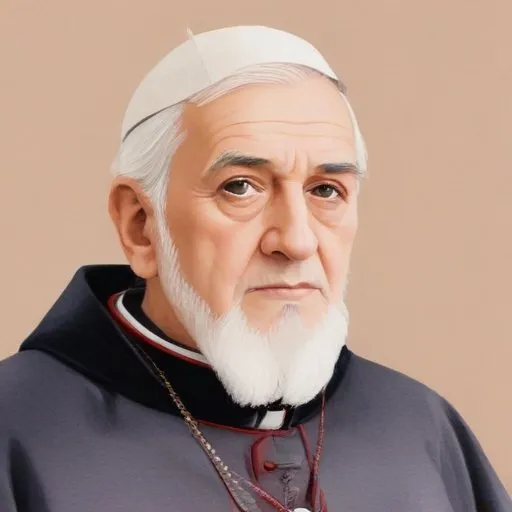
A Czech-American bishop and saint who played a crucial role in establishing the Catholic Church in the United States, particularly in the education and missionary fields. He's also known for his charitable work and founding the Sisters of Saint Francis.
John Neumann, a Bohemian-born American prelate of the Catholic Church, is renowned for being the first male US citizen to be canonized as a saint in 1977. He is credited with founding the first Catholic diocesan school system in the United States, which revolutionized the education landscape in the country.
Neumann was born on March 28, 1811, in Prachatitz, Kingdom of Bohemia (now part of the Czech Republic), to Philip Neumann and Agnes Lep. He was the third of six children, and his love for books and reading earned him the nickname "my little bibliomaniac" from his mother.
Neumann began his education at the town school at the age of six and demonstrated exceptional academic prowess. With the support of his parents, he continued his studies beyond grammar school, which was unusual for boys of his time.
In 1836, Neumann immigrated to the United States, where he was ordained as a priest in 1840. He joined the Redemptorist order and dedicated his life to serving the Catholic community in the United States.
Neumann's dedication to education led him to establish the first Catholic diocesan school system in the United States. This pioneering effort not only provided access to education for Catholics but also helped to promote Catholic values and principles.
Neumann's selflessness, compassion, and unwavering commitment to his faith earned him the respect and admiration of his peers and the community. He became the fourth Bishop of Philadelphia in 1852, a position he held until his death in 1860.
John Neumann's legacy extends far beyond his own lifetime. His contributions to education and the Catholic Church have had a lasting impact on American society. He is an inspiration to many, and his canonization in 1977 serves as a testament to his extraordinary life and achievements.
Today, Neumann's feast day, January 5, is celebrated by Catholics around the world. His shrine, located in Philadelphia, is a popular pilgrimage site, and his legacy continues to inspire and motivate people of all faiths.
John Neumann's remarkable life and achievements serve as a shining example of dedication, compassion, and selflessness. His legacy continues to inspire and motivate people around the world, making him a truly remarkable figure in American Catholic history.
Born in 1858
Founded a Catholic order to educate and care for Native Americans and African Americans, and dedicated her life to fighting racism and inequality.
Born in 1735
Founder of Georgetown University, the oldest Catholic university in the US, and a prominent figure in American Catholicism. He played a crucial role in establishing Catholic education in the US.
65 Years Old
Australian rugby union player who represented his country in the 1950s and 1960s, known for his skillful playmaking and goal-kicking abilities.
76 Years Old
A mastermind behind iconic 80s teen movies, crafting relatable stories that resonated with generations of adolescents, leaving an indelible mark on the coming-of-age genre.
Born in 1921
The American Catholic Church's sixth archbishop, serving from 1968 to 1983, known for his progressive stance on social issues and his role in shaping the Church's response to the civil rights movement.
